
Domestic Helper for Stroke Recovery in Singapore
Hire a domestic helper for stroke recovery in Singapore with a clear care scope, verified experience, clinician-led training and a realistic family backup plan.
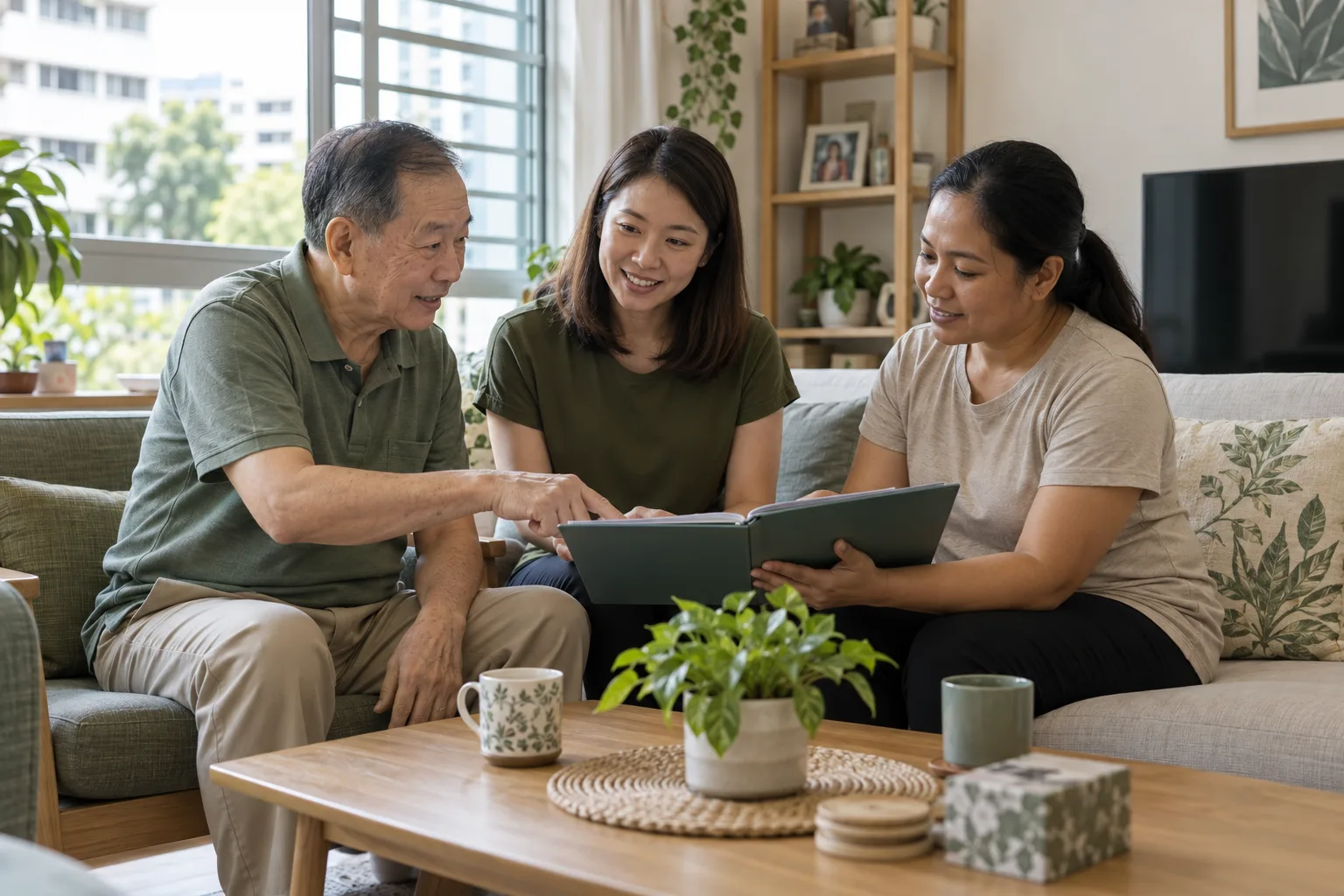
When a parent or spouse returns home after a stroke, the hiring question is not simply “Who has elderly-care experience?” It is “Who can learn this person’s care routine safely, communicate respectfully and work alongside the family and rehabilitation team?” A domestic helper can make daily life more manageable, but the household must define her role before shortlisting candidates.
Start with the person’s current care needs
Ask the treating team for an individual care plan rather than copying a routine from another stroke survivor. AIC’s discharge-preparation checklist highlights questions about safe eating, mobility, medication and follow-up support. Use those questions to establish what can be done at home and what needs professional help. This is a hiring guide, not medical advice or a manual for feeding, transfers or rehabilitation exercises.
Write a one-page job brief using the person’s actual needs, preferred language and usual day. State whether the helper will also cook and clean, whether appointments require transport, and who will take over when the family is unavailable. Discuss the brief with the stroke survivor wherever possible. A recovery plan should preserve their choices, privacy and independence rather than automatically assigning every task to someone else.
| Area | Question for the care team | What to tell candidates |
|---|---|---|
| Daily activities | Which activities need assistance, and how much? | The agreed tasks and expected supervision |
| Movement | Is equipment or more than one trained person required? | No solo lifting or improvised techniques |
| Eating and drinking | Are there swallowing or dietary instructions? | Only the prescribed plan, after training |
| Communication | What approach works best for this person? | Language, preferred aids and time needed |
| Appointments | What rehabilitation and follow-ups are planned? | Travel arrangements and family involvement |
| Escalation | Which changes need urgent or routine contact? | Written contacts and clear reporting duties |
Interview for relevant tasks, not a reassuring label
“Stroke care” on a biodata form may describe anything from preparing meals to assisting with a complex daily routine. Ask the candidate to explain one previous arrangement in her own words: what she did, what she was not allowed to do, who trained her, and whom she contacted when something changed. Clarify dates, duration and whether another caregiver was usually present. Do not infer ability from nationality, age or the number of years in Singapore.
- Which stroke-related daily activities did you support, and which remained with the family or professionals?
- Who showed you the care routine, and how was your understanding checked?
- How did you communicate when the person needed more time or had difficulty speaking?
- What would you do if an instruction was unclear or seemed different from the written care plan?
- How did you manage appointments alongside cooking and cleaning?
- Which duties would you need more training or assistance to perform confidently?
A useful scenario is administrative, not clinical: ask how she would handle a therapy appointment that clashes with meal preparation. A strong answer identifies the conflict, contacts the designated family member and rearranges lower-priority work. Do not ask an applicant to demonstrate physical care on your relative as an interview test. References and certificates can support the discussion, but neither replaces training for this particular person.
Keep rehabilitation under professional direction
AIC’s community rehabilitation service guide describes support for movement, speech and swallowing needs, including after stroke. Ask the doctor or therapist which services are appropriate. The helper may support attendance and follow the activities specifically taught to her; she should not invent exercises, change food textures or adjust treatment because a previous employer used a different approach.
For medication-related tasks, obtain clear instructions from the clinical team and decide who remains responsible for organising and checking them. The helper should report uncertainty rather than guess, change a dose or replace a prescribed medicine. Give her a named family contact and an alternative contact. Ask clinicians to explain when emergency help is needed, and keep that plan accessible to every caregiver.
Budget time and money for proper training
Explore approved courses through AIC’s Caregivers Training Grant page. Eligibility is tied to the care recipient and caregiver arrangement; do not assume a stroke diagnosis automatically qualifies. Confirm the course content and language with the provider, and attend relevant training with the helper where practical so both of you understand the same instructions.
| Stage | Employer action | Checkpoint |
|---|---|---|
| Before arrival | Confirm the job brief and professional care arrangements | No unsupported promise of round-the-clock care |
| Initial orientation | Introduce the survivor, family contacts and written routine | The helper can explain whom to ask |
| Training period | Arrange patient-specific instruction with qualified professionals | Required skills checked by the trainer |
| Supervised practice | Keep the trained family caregiver available | Uncertainty reported without blame |
| First review | Compare real workload with the agreed duties | Reduce conflicts and arrange backup |
| When needs change | Request reassessment and update instructions | Everyone uses the same current plan |
Design backup before it becomes urgent
One live-in helper cannot be the only answer to every appointment, overnight need and household chore. Identify another trained caregiver for rest days, illness and leave. If the person needs frequent night assistance, discuss additional support with the care team and protect the helper’s sleep. Put optional housework below essential care in the schedule, and revisit the arrangement when recovery, fatigue or care needs change.
How this guide avoids overlap
This guide focuses on matching a helper to stroke-specific support and training. For the wider transition home, use the hospital-discharge hiring guide. For mobility-focused hiring questions, read the wheelchair and mobility-care guide. The elderly-care hiring guide covers the broader shortlist. Compare relevant experience on Biodata.sg after establishing your care requirements.
Sources and review note
Reviewed on 17 September 2026 against AIC’s discharge-preparation, community-rehabilitation and Caregivers Training Grant guidance. The interview and onboarding templates are editorial planning suggestions. Patient-specific care decisions belong to the treating professionals; verify current service and grant arrangements with AIC or the provider.
Frequently asked questions
Can a domestic helper look after a stroke survivor at home?
A helper can support agreed daily activities after the care team assesses the person’s needs and provides appropriate training. She is not a substitute for a nurse or therapist. Arrange professional support and another trained adult where the care plan requires them.
Does previous elderly-care experience prove stroke-care competence?
No. Ask which tasks the candidate performed, what training she received and how much supervision she had. Stroke-related communication, swallowing and mobility needs differ between people, so previous experience must be matched to the current clinician-approved plan.
Can a domestic helper use the Caregivers Training Grant?
AIC says migrant domestic workers can qualify when they are the main caregivers of eligible care recipients. The grant supports approved courses, not every training programme. Check the recipient’s eligibility, available balance and course arrangements directly with AIC and the training provider.
Official references
These primary references support the guide. A verification date is shown only after a dated editorial review.
- Preparing for hospital discharge and care at home — Agency for Integrated Care (checked 17 Sept 2026)
- Community rehabilitation for movement, speech and swallowing needs — Agency for Integrated Care (checked 17 Sept 2026)
- Caregivers Training Grant — Agency for Integrated Care (checked 17 Sept 2026)