
Elderly Care Maid Singapore: How to Shortlist a Suitable Helper
A practical Singapore guide to shortlisting and interviewing an elderly care helper for mobility support, personal routines, meals, safety, and companionship.
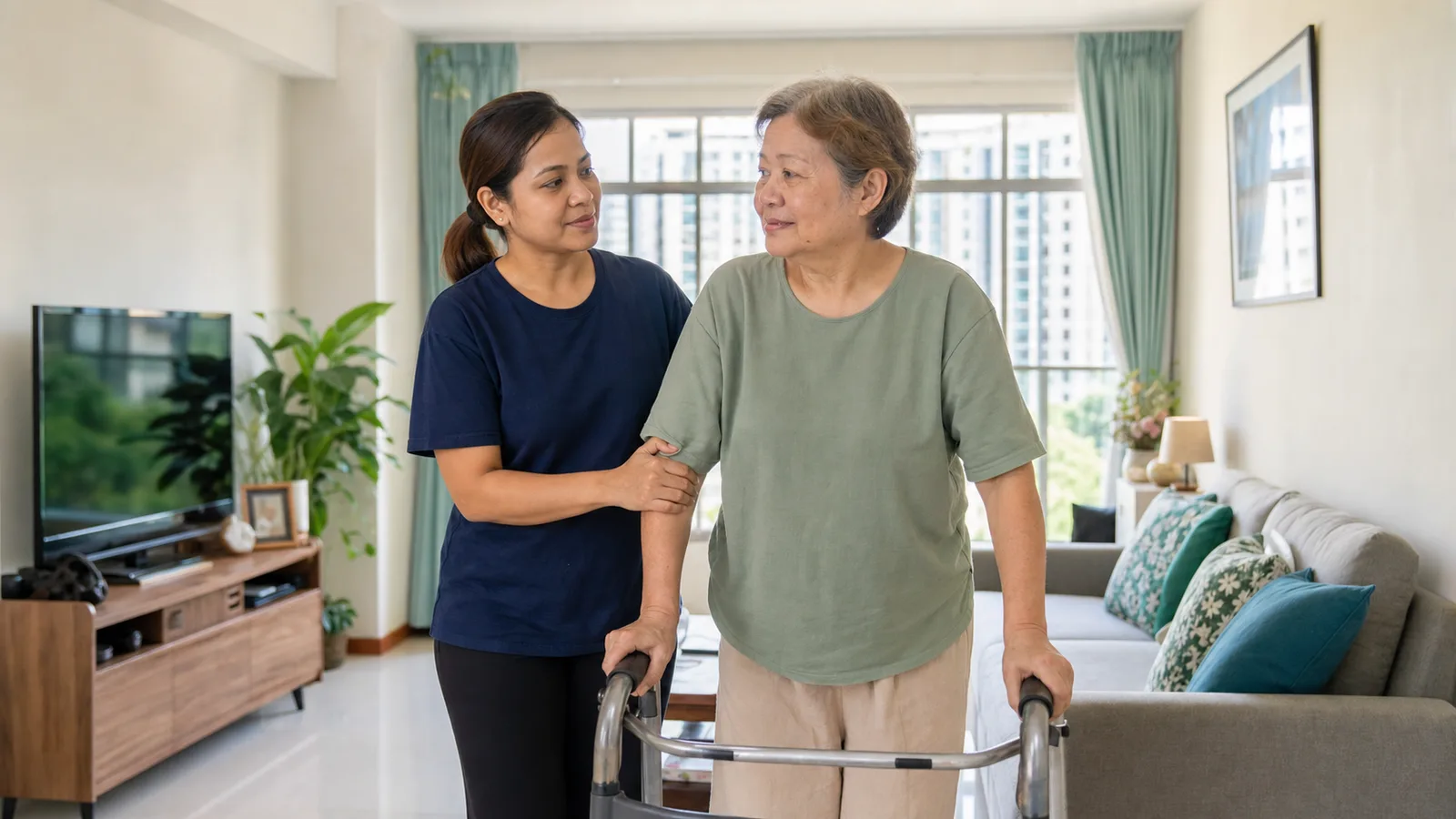
Hiring an elderly care maid in Singapore starts with the senior's daily routine, not a nationality or a generic "caregiver" label. The right helper should match the actual support needed at home, communicate respectfully with the senior, and understand when a family member or healthcare professional must step in. You can begin by browsing elderly care maid biodata, then use this guide to build a focused shortlist.
Quick answer
Write a one-page care routine, shortlist helpers with matching documented experience, and interview them with practical scenarios about mobility, hygiene, meals, communication, night-time needs, and emergencies. Separate "experienced" from "willing to learn", involve the senior where possible, and confirm the helper's rest days and backup-care plan before hiring.
Start with the senior's real care needs
Two households looking for elderly support may need completely different helpers. One senior may be independent and mainly need meals, companionship, and reminders. Another may need help with bathing, transfers, toileting, or walking. Describe a normal weekday and night before you open any biodata.
- Mobility: independent walking, walking frame, wheelchair, stairs, or transfer assistance
- Personal routines: bathing, dressing, toileting, grooming, and continence support
- Meals: texture, diet, food preferences, and whether feeding assistance is needed
- Communication: preferred language or dialect, hearing needs, patience, and clear updates
- Supervision: memory concerns, fall risk, appointments, outings, and night-time waking
- Household duties: realistic cleaning and cooking expectations alongside care work
Read experience carefully: willing is not the same as experienced
A biodata may show both willingness and prior experience. Look for work-history details that match your situation: the age and mobility of the person cared for, the tasks performed, how long the placement lasted, and whether the helper worked independently or alongside family members. Ask the representing agency what was verified and what came from self-reporting.
Use AI helper search for a detailed request such as "experienced helper for an elderly mother who uses a walking frame, prefers simple Chinese meals, and wakes once at night". Then compare the returned profiles with the complete maid biodata directory.
Interview questions for elderly care helpers
- Tell me about the last elderly person you supported. What could they do independently?
- Show me how you would help someone stand up from a chair without pulling their arms.
- What would you do if the senior felt dizzy while walking?
- How would you respond if the senior refused a bath or meal?
- How did you record meals, fluid intake, appointments, or changes for the family?
- What signs would make you call the family immediately or seek emergency help?
- How would you organise housework when the senior needs close supervision?
- What rest-day arrangement and sleep routine would help you sustain this role?
Strong answers are specific and safety-conscious. A helper should be comfortable saying that she would stop, ask for help, or follow the family's written instructions. Avoid expecting medical judgment from someone hired for domestic work.
Plan training and a written handover
Even an experienced helper needs household-specific training. Demonstrate transfers, walking routes, meal preparation, emergency contacts, appointment transport, and how the senior prefers to be addressed. If a therapist or nurse has taught the family a technique, arrange for the helper to learn it directly rather than relying on a verbal summary.
Protect rest and build backup care
Care needs do not cancel employment protections. MOM says migrant domestic workers are entitled to one rest day per week, and at least one rest day each month cannot be compensated away. Families should arrange relatives, respite services, or other cover in advance. Read the official MOM guidance on rest days and well-being.
Compare the agency as well as the helper
Ask how the agency checked the helper's experience, what training is documented, who helps if the placement struggles, and what the replacement terms exclude. Verify the licence and available performance information through the MOM Employment Agencies and Personnel Search, then compare agencies on Biodata.sg.
Sources and review note
Last reviewed 5 August 2026. Primary references: MOM employer requirements, MOM employment rules for MDWs, and the MOM rest-day guidance linked above.
Frequently asked questions
What should I look for in an elderly care maid in Singapore?
Look for relevant experience with the senior's actual needs, such as safe mobility support, personal hygiene, meals, companionship, and following a written routine. Confirm the experience with scenario-based interview questions instead of relying only on biodata labels.
Can a domestic helper replace a nurse for an elderly person?
No. A domestic helper can support non-clinical daily routines, but should not be treated as a substitute for a nurse or trained medical professional. Ask the senior's care team which tasks require professional care and train the helper only for appropriate household support.
How many elderly care helpers should I interview?
A shortlist of three to five relevant helpers is usually manageable. Use the same questions for every interview, compare specific examples from their work history, and confirm salary, rest days, availability, and agency support before deciding.
Official references
These primary references support the guide. A verification date is shown only after a dated editorial review.
- MOM guidance on rest days and well-being — Ministry of Manpower Singapore (checked 5 Aug 2026)
- MOM Employment Agencies and Personnel Search — Ministry of Manpower Singapore (checked 5 Aug 2026)
- MOM employer requirements — Ministry of Manpower Singapore (checked 5 Aug 2026)
- MOM employment rules for MDWs — Ministry of Manpower Singapore (checked 5 Aug 2026)