
Domestic Helper for a Muslim Household in Singapore
Hire and onboard a helper for a Muslim household in Singapore with clear halal-kitchen rules, respectful interviews, food-safety routines and Ramadan planning.
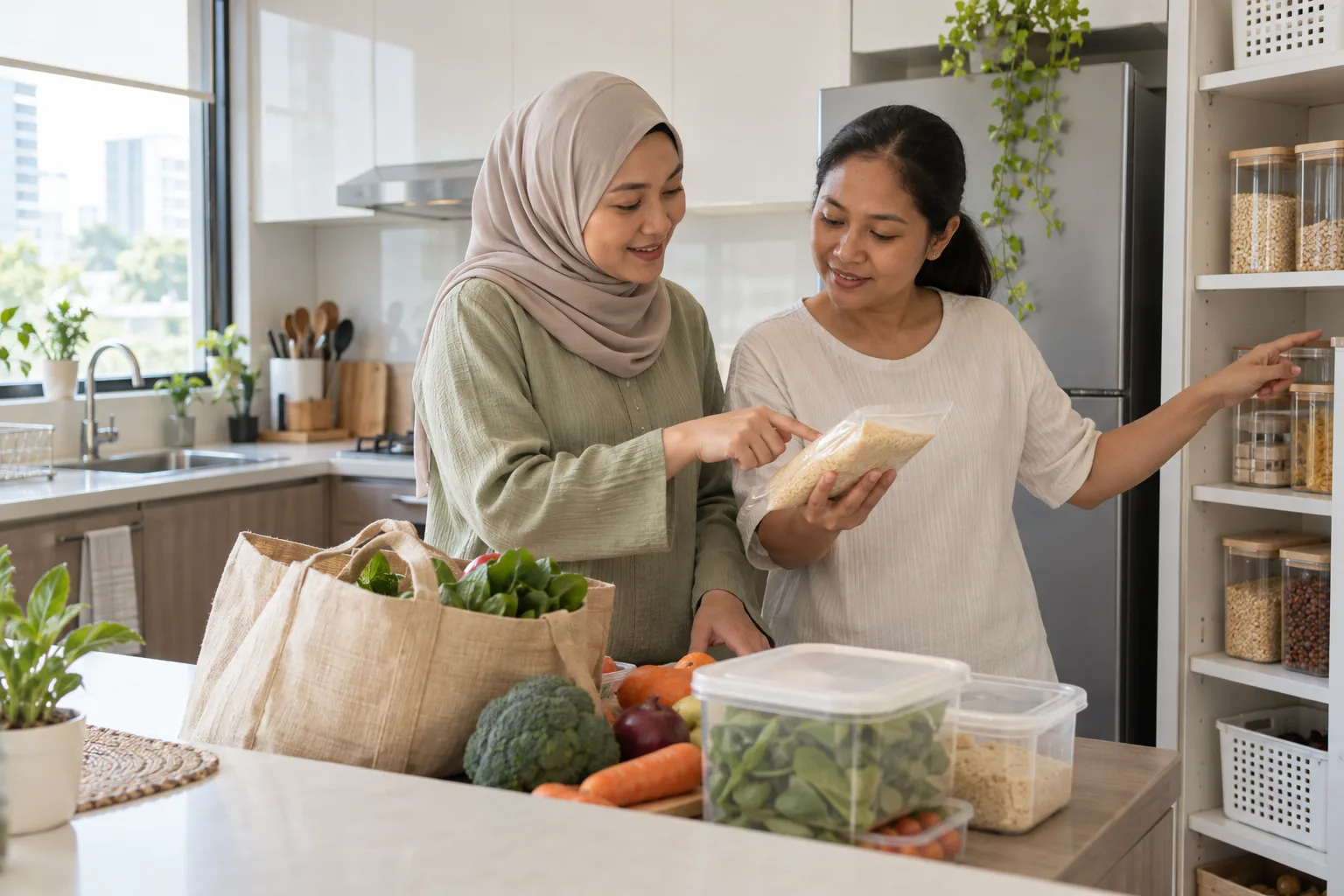
“Muslim household” is not a complete job description. Families differ in how they buy food, organise utensils, handle deliveries, observe prayer times and plan Ramadan. A candidate can assess the role only when you explain your own practices. The goal is not to test religious identity; it is to find someone who can follow a clear kitchen and household routine respectfully.
Define your household practice before the interview
MUIS’s consumer guide to basic halal principles explains that halal means lawful or allowable and describes conditions for processed food, including ingredients, equipment and separation from non-halal substances during preparation, storage and transport. Use that authoritative starting point, then write down the operational choices your family actually follows. For case-specific religious questions, ask MUIS or a qualified religious adviser rather than expecting a helper to decide.
| Area | Family defines | Helper needs to know |
|---|---|---|
| Groceries | Which marks, suppliers or products the family accepts | How to check and who approves uncertainty |
| Ingredients | Rules for sauces, flavourings and processed foods | Keep original labels and do not guess |
| Utensils | Whether any separation or dedicated tools are used | Where items belong and what to do after a mix-up |
| Deliveries | Which vendors or orders are acceptable | Do not approve an unclear substitution alone |
| Guests | How outside food is handled | Ask before plating or storing it |
| Religious calendar | Prayer, Ramadan and celebration routines | Schedule changes and designated decision-maker |
Keep the brief concrete. “Everything must be halal” does not tell a new cook how your family checks an imported sauce, whether shared appliances are used or what to do with an unexpected food gift. Label cupboards where useful, demonstrate the routine and create a safe fallback: when information is unclear, set the item aside and contact one named adult.
Interview for careful process, not stereotypes
A candidate’s nationality, religion or previous employer does not prove familiarity with your household’s practice. Ask what tasks she personally performed and use scenarios that reveal whether she reads, asks and reports mistakes. If labels are in a language she does not read comfortably, decide whether picture-based instructions, an approved-product list or supervised shopping can bridge the gap.
- How would you check a packaged ingredient you have not used before?
- What would you do if a delivery substituted another brand?
- How would you respond if a guest brought food and the family was unavailable?
- If a utensil was used incorrectly, whom would you tell and what would you do next?
- Which recipes or kitchen equipment would you need demonstrated?
- Are there foods or religious practices we should understand for your own meals?
MOM’s guidance on understanding a helper’s dietary preferences reminds employers that helpers may have restrictions for cultural, faith or health reasons and recommends open discussion about meals. A family’s halal routine does not remove the employer’s duty to provide adequate food that the helper can and will eat. Ask about her preferences without requiring her to share every family meal.
Separate halal controls from general food safety
Religious acceptability and food safety are different checks; both matter. Teach the household’s halal system and ordinary hygiene side by side. Use clear storage locations, keep packaging until products are used, and demonstrate cleaning and safe handling. Correct a mistake by fixing the process, not by shaming the person who reports it.
SFA’s food-safety guidance for home kitchens advises keeping raw food away from cooked or ready-to-eat food, cooking thoroughly, storing chilled foods safely and cleaning utensils and surfaces between uses. These practices reduce contamination risk but do not determine halal status. Use the right authority for each question.
| Day | Employer demonstrates | Helper practises |
|---|---|---|
| 1 | Kitchen zones and approved staples | Finds products and asks before substitutes |
| 2 | Shopping and label-check routine | Builds a supervised basket |
| 3 | Two familiar family meals | Uses the agreed utensils and storage |
| 4 | Delivery and guest-food rules | Runs through an uncertain order scenario |
| 5 | Cleaning and food-safety sequence | Separates raw and ready-to-eat handling |
| 6 | Meal planning for the week | Flags ingredients needing approval |
| 7 | Review questions and near misses | Explains the stop-and-ask rule back |
Plan Ramadan and religious routines without assumptions
Before Ramadan, discuss what changes for the household: earlier breakfast preparation, later dinner, shopping peaks, guests or additional cleaning. Remove or postpone lower-priority chores if the meal timetable expands. Identify which adult approves menu and schedule changes so instructions do not come from several family members at once.
Do not assume whether the helper will fast. If she chooses to, discuss realistic meal access, hydration outside fasting hours, sleep and workload. If she does not, ensure she can still eat appropriately and privately without stigma. MOM’s rest-day and well-being rules require a weekly rest day, including at least one each month that cannot be compensated away, and say employers must provide three meals a day while respecting religious dietary needs.
How this guide avoids overlap
This guide owns halal-kitchen onboarding, Muslim-household expectations and Ramadan scheduling. The general cooking guide covers menu and cooking skills, the vegetarian-household guide covers plant-based preferences, and the food-allergy guide covers clinician-led allergy controls. Do not treat those distinct needs as interchangeable.
Sources and review note
Reviewed on 22 September 2026 against MUIS halal consumer guidance, SFA home food-safety advice and MOM guidance on food, rest days and well-being. The checklists are editorial hiring and onboarding suggestions, not a religious ruling or halal certification. Refer specific religious questions to MUIS or a qualified adviser.
Frequently asked questions
Must a helper in a Muslim household also be Muslim?
No blanket rule requires that. Hire for the candidate’s willingness and ability to follow your clearly explained household practices, and do not infer knowledge from religion or nationality. A Muslim candidate may also follow personal practices that differ from yours, so discuss rather than assume.
How should I test halal-kitchen understanding in an interview?
Use practical scenarios: an unfamiliar ingredient, a delivery without clear information, or a utensil used with the wrong food. Look for label checking, pausing and asking the designated family member—not confident guessing. Teach your household’s written system after hiring.
What should change during Ramadan?
Agree on the household meal timetable, workload and rest before Ramadan. Do not assume whether the helper will fast. If she chooses to fast, discuss her meal access and a sustainable schedule; if she does not, protect her ability to eat appropriately. Weekly rest-day obligations continue.
Official references
These primary references support the guide. A verification date is shown only after a dated editorial review.
- Basic halal principles for consumers — Islamic Religious Council of Singapore (checked 22 Sept 2026)
- Connecting through cuisine: understanding your helper’s dietary preferences — Ministry of Manpower Singapore (checked 22 Sept 2026)
- Food safety tips — Singapore Food Agency (checked 22 Sept 2026)
- Rest days and well-being for migrant domestic workers — Ministry of Manpower Singapore (checked 22 Sept 2026)