
Domestic Helper for a Food-Allergy Home in Singapore
Hire a helper for a food-allergy household in Singapore: share the clinician’s plan, assess label-reading, prevent cross-contact and train every caregiver.
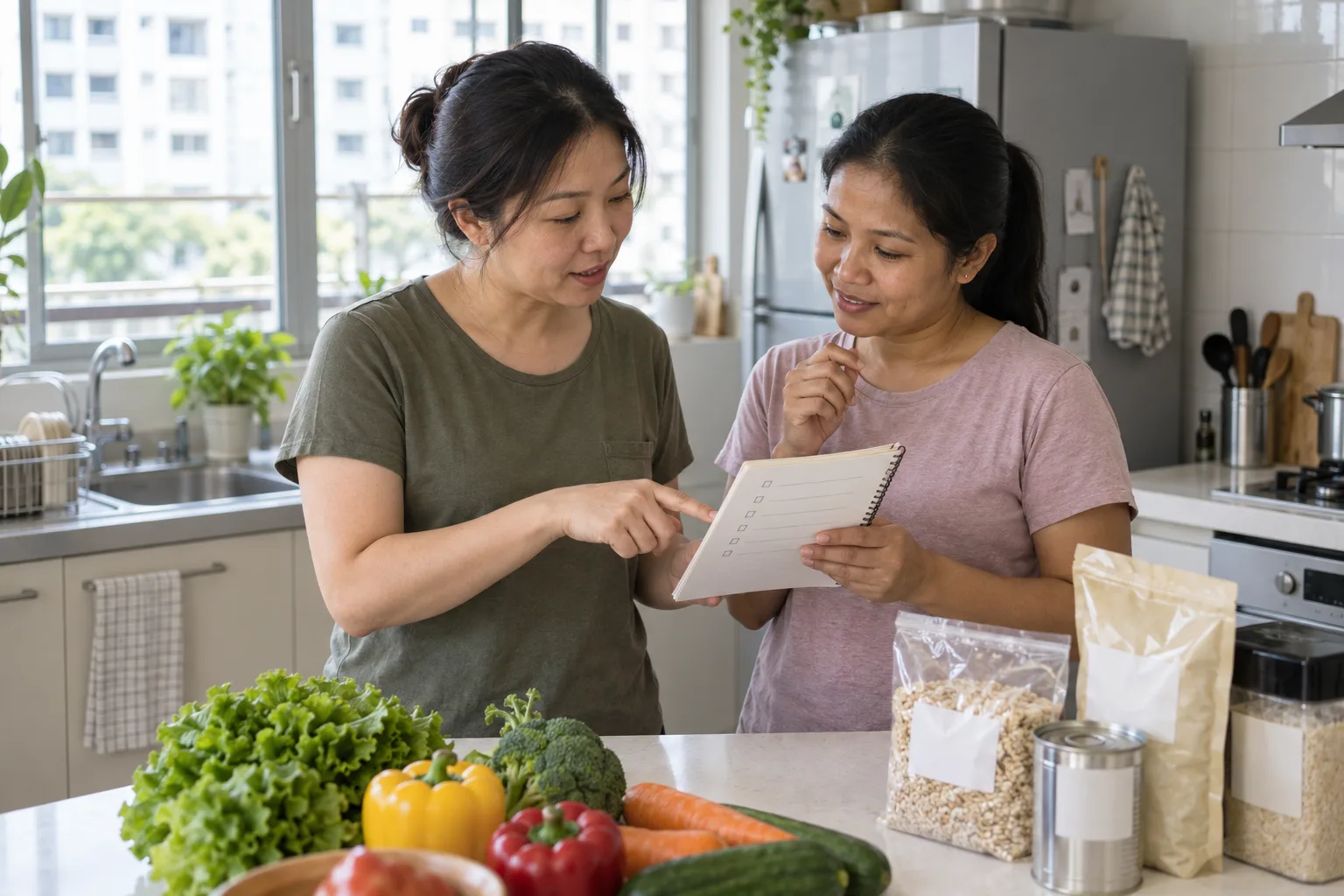
A food-allergy household needs a different hiring conversation from an ordinary cooking-skills interview. The key question is whether a candidate can follow a precise, person-specific plan, pause when uncertain and communicate promptly. Parents and clinicians—not the helper—define which foods to avoid and what to do if a reaction occurs. A clear routine and training matter more than a vague promise to “be careful”.
Get the individual plan before recruiting
HealthHub advises families to inform other caregivers about a baby’s allergies and show them what to do if a reaction occurs. Obtain the treating clinician’s current advice for the particular child or adult. Record the diagnosed allergens, approved foods, restrictions on shared equipment, emergency contacts and the action plan. Do not substitute online lists of common allergens for a diagnosis, or remove unrelated foods without professional advice.
Give candidates the scope without unnecessarily disclosing private records. Explain that the role includes checking packages, keeping a controlled shopping list, following kitchen rules and contacting a parent when a label is unclear. After hiring, share only the relevant current medical instructions and arrange practical training. If more than one household member prepares food, the same rules must apply to all of them.
| Item | Family decides and records | Helper’s action |
|---|---|---|
| Diagnosed allergen | Exact food and any clinician advice | Use only the approved list |
| Packaged foods | Approved products and how to handle uncertainty | Read the current ingredient and advisory label |
| Shared kitchen | Utensil, storage and cleaning arrangements | Follow the agreed setup; report breaches |
| Meals outside home | Who approves catered or gifted food | Do not guess or substitute |
| Symptoms and emergency | Clinician’s written plan and contacts | Follow training and summon help promptly |
| Plan changes | Who can authorise updates | Use the latest dated version |
Interview for a habit of checking and asking
Give a realistic scenario rather than testing medical knowledge. Hand the candidate a generic packaged-food description and ask where she would look for ingredients, whether she would use it if the information were incomplete, and whom she would ask. A careful answer includes pausing; confidence without a label check is not a virtue. Ask about past experience with dietary restrictions, but do not assume another family’s allergy rules transfer to yours.
- Tell me how you would check a newly purchased sauce before cooking.
- What would you do if an approved brand changed its recipe or packaging?
- How would you handle a well-meaning guest offering the child a snack?
- Who would you contact if a parent could not answer a food question?
- Which instructions or training would you need before preparing meals alone?
- How would you report a possible kitchen mix-up without fearing blame?
SFA’s food-allergy and intolerance guidance explains ingredient declarations, precautionary “may contain” statements and the risk of allergen cross-contact. Labels can change; the absence of a particular advisory statement is not a substitute for the person’s clinical advice. If a product is uncertain, ask the parent and, where needed, the manufacturer rather than experimenting with a small amount.
Organise the kitchen so the safe choice is easy
Create a small, current list of approved ingredients, dishes and substitutions. Store products in their original packaging so labels remain available. Agree which surfaces, utensils and storage locations are used, and demonstrate cleaning rather than assuming it is obvious. If household members eat the allergen, ask the clinician about the appropriate level of separation and communicate it to every cook. Do not describe a single universal kitchen setup as guaranteed safe for all allergies.
Check school lunches, birthday treats, delivery food and relatives’ gifts too. A helper should not be asked to approve restaurant food on the basis of appearance. Give her a clear authority to say “I need to check with the parent” and a practical fallback meal if she cannot obtain an answer. Revisit the routine after a new diagnosis, reassessment, ingredient change or near miss, without making someone hide a mistake.
| Stage | Employer action | Check |
|---|---|---|
| Before arrival | Obtain a current clinician-approved plan | Family understands its responsibilities |
| First kitchen tour | Show approved foods, labels and storage | Helper can find the right information |
| Demonstration | Prepare familiar meals together | No unapproved substitutions |
| Emergency orientation | Arrange appropriate instruction on the personal plan | Helper knows when and whom to call |
| First independent meals | Use a short menu and reachable parent | Questions raised before serving |
| Monthly review | Check labels, stocks and plan version | Changes shared with every caregiver |
Do not improvise an emergency response
A severe allergic reaction can be life-threatening. HealthHub’s emergency-care guidance for children advises calling 995 for an ambulance for serious allergic reactions. If emergency medicine has been prescribed, the family must ensure that the helper knows the individual plan and receives appropriate instruction in its use. This guide deliberately does not provide symptom thresholds, doses or injection steps; follow the treating clinician’s current instructions and emergency services.
Plan for the helper’s rest day, leave and illness: a second caregiver must understand the same food and emergency rules. When the parent is away, the backup should know where the plan and prescribed supplies are and be reachable. A family cannot make allergy safety depend on one worker never taking a break.
How this guide avoids overlap
This guide owns food-allergy hiring, label checks, cross-contact and clinician-led emergency handovers. The vegetarian-household guide addresses preference and dietary compatibility, not allergy management. The general cooking guide covers wider menu skills and food handling; the infant-care guide covers broader baby routines.
Sources and review note
Reviewed on 19 September 2026 against SFA’s allergy-labelling and cross-contact guidance and HealthHub’s allergy and emergency-care resources. The interview and onboarding tables are editorial planning suggestions, not medical advice or an allergy action plan. Confirm every personal restriction and emergency instruction with the treating clinician.
Frequently asked questions
Can a domestic helper care for a child with food allergies?
A helper can support an agreed meal and care routine after parents share the child’s clinician-approved plan and train her on it. The family remains responsible for medical decisions and backup. Previous cooking experience does not by itself demonstrate understanding of this child’s allergen or emergency instructions.
Is a vegetarian or “no nuts” label enough to prevent a reaction?
No. An allergy is person-specific, and products may contain hidden ingredients or have cross-contact risk. Read the full label every time, including advisory statements, follow the person’s clinical advice, and ask the manufacturer or family before using an uncertain product.
What should a helper do if a severe reaction is suspected?
Follow the individual’s written clinician-provided emergency plan and call 995 for urgent help when indicated. HealthHub advises calling an ambulance for serious allergic reactions. Do not rely on a generic article to decide symptoms, medicines or doses; ensure the helper receives appropriate hands-on instruction for any prescribed emergency treatment.
Official references
These primary references support the guide. A verification date is shown only after a dated editorial review.
- When allergies occur in babies and young children — HealthHub Singapore (checked 19 Sept 2026)
- Information on food allergy, labels and cross-contact — Singapore Food Agency (checked 19 Sept 2026)
- Emergency care for children — HealthHub Singapore (checked 19 Sept 2026)
- Eight steps to hiring a helper — Ministry of Manpower Singapore (checked 19 Sept 2026)