
Domestic Helper for Cooking in Singapore: Interview & Meal Guide
A Singapore employer guide to choosing a domestic helper for cooking, with interview questions, meal planning, food safety, training, and workload tips.
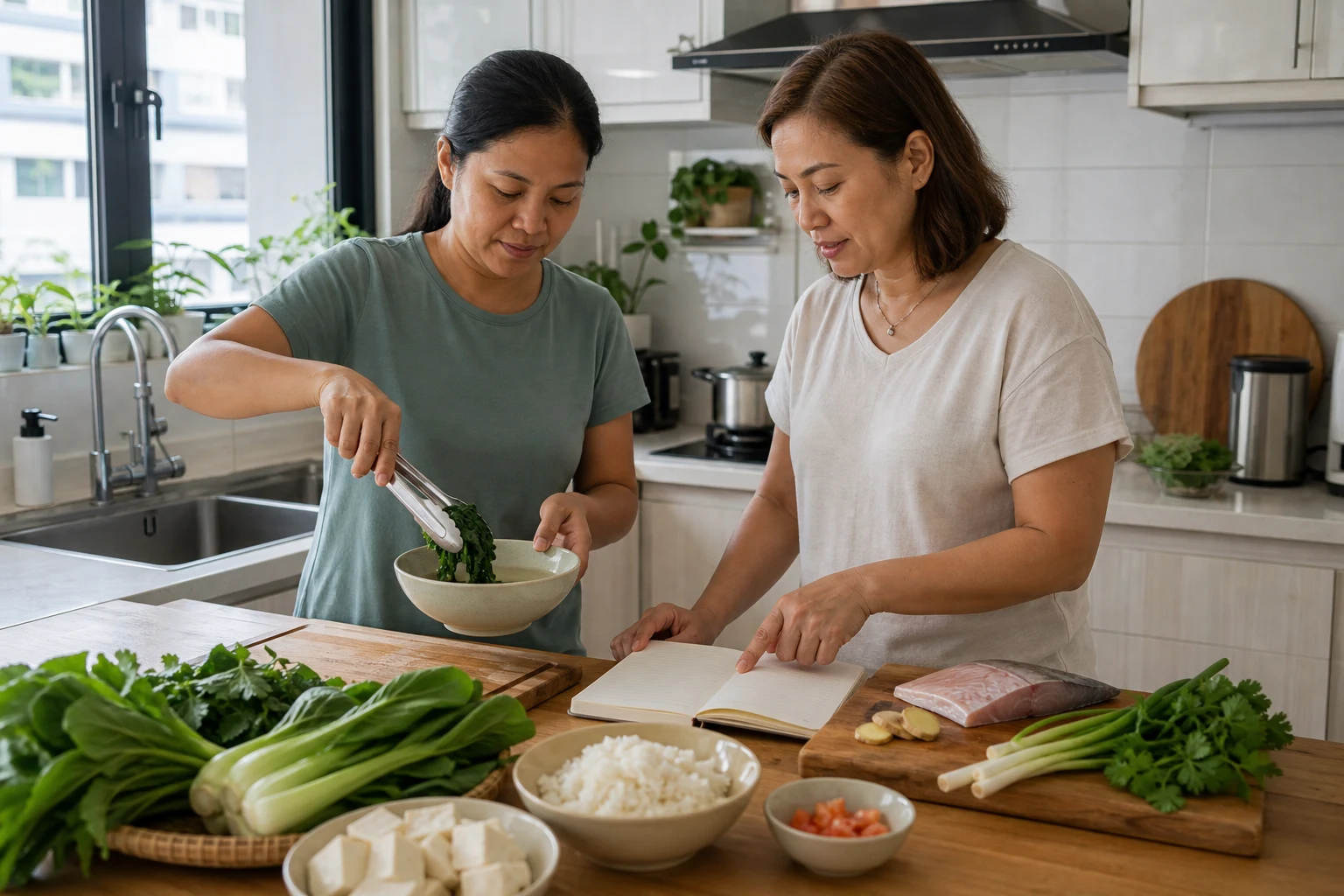
A domestic helper who cooks well for one household may still need training for yours. Cuisine, spice level, allergies, religious requirements, portions, budget, equipment, and meal timing all shape the job. Browse current cooking helper biodata, then assess candidates against a realistic weekly menu rather than a vague “good at cooking” label.
Quick answer
List the meals you actually eat, shortlist helpers with relevant cooking experience, and ask every candidate the same recipe, hygiene, budgeting, and time-management questions. Use safe interview methods instead of informal work trials. After hiring, teach five to seven core meals, document portions and dietary rules, and expand the menu gradually.
Define the cooking role before you shortlist
Cooking for two adults three evenings a week is different from preparing breakfast, packed lunches, dinner, and texture-modified food for a multigenerational household. Tell the helper how many people eat each meal, which cuisines recur, who plans and buys groceries, and what other duties compete for the same time.
- Meals per day and number of diners, including packed school or office meals
- Common cuisines, must-know dishes, spice level, and willingness to try new recipes
- Allergies, vegetarian or halal requirements, medical diets, and cross-contact rules
- Grocery list, market or supermarket trips, budget, receipts, and delivery handling
- Batch cooking, leftovers, food storage, kitchen cleaning, and appliance use
- Childcare, eldercare, pet care, laundry, and cleaning expected alongside cooking
Read cooking experience with context
Ask what the helper cooked without assistance, which meals she prepared most often, how many people she served, and whether she followed a recipe or planned independently. Photos can prompt a useful conversation, but they are not proof that the candidate cooked the dish. Ask the agency what information was verified and what was self-reported.
Use AI helper search with details such as “simple Chinese and Southeast Asian dinners, low-salt meals for four, school lunch twice a week, and willing to follow recipes”. Compare the matches with the full maid biodata directory.
Cooking interview questions for domestic helpers
- Which five dishes can you cook confidently without help? Walk me through one.
- How do you plan portions for adults and children without wasting food?
- What do you do differently when a family member has an allergy or special diet?
- How do you store raw ingredients, cooked food, and leftovers safely?
- How would you learn an unfamiliar dish from a written recipe or video?
- How do you plan a grocery list and stay within a weekly budget?
- What would you cook on a day when childcare or another urgent duty takes more time?
- Which kitchen equipment have you used, and what would you need demonstrated?
A clear verbal walkthrough often reveals sequence, hygiene habits, confidence, and whether the candidate asks useful questions. Avoid informal or unpaid cooking trials. Once the Work Permit and employment are valid, supervised kitchen training is the right time to assess and teach hands-on routines.
Set non-negotiable food-safety habits
The Singapore Food Agency advises keeping kitchen surfaces and utensils clean, washing equipment between raw and ready-to-eat use, using separate chopping boards where possible, cooking food thoroughly, thawing safely, and keeping refrigerators at 4°C or below. Review the current SFA food safety tips together and demonstrate how these rules work with your kitchen, appliances, and storage containers.
- Label the boards and tools used for raw and ready-to-eat food.
- Show where raw meat, seafood, cooked food, and produce belong in the refrigerator.
- Write down allergy ingredients and the rule for preventing cross-contact.
- Agree how leftovers are cooled, covered, dated, reheated, and discarded.
- Demonstrate the stove, oven, pressure cooker, air fryer, and other unfamiliar appliances safely.
- Keep cleaning chemicals away from food and never decant them into food containers.
Use a simple meal framework
HealthHub's My Healthy Plate guide suggests a simple starting proportion: half the plate fruit and vegetables, one quarter wholegrains, and one quarter lean protein. It is a planning tool rather than a substitute for medical dietary advice. Families with allergies, diabetes, swallowing needs, kidney disease, or other clinical requirements should give the helper instructions from the relevant healthcare professional.
| Day | Training focus | Example outcome |
|---|---|---|
| Day 1 | Kitchen tour, hygiene, allergies, appliances | One familiar supervised meal |
| Day 2 | Family recipe and portion sizes | Repeat one core dish |
| Day 3 | Grocery list and budget | Plan ingredients for two meals |
| Day 4 | Independent sequence with check-in | Cook two known dishes |
| Day 5 | Taste review and safe leftovers | Record adjustments for next week |
Teach recipes without micromanaging
Choose five to seven repeatable meals first. Demonstrate one dish, write or photograph the key steps, let the helper repeat it, and give specific feedback on one or two changes. Record quantities in the measuring tools available in your kitchen. Once the core menu is consistent, invite the helper to suggest dishes she already cooks well.
Balance cooking with the whole job
Daily multi-course meals, market trips, batch cooking, special diets, and kitchen cleanup take time. If childcare or eldercare becomes the priority, simplify that day's menu or move non-urgent chores. Discuss the helper's own food needs and provide adequate meals; do not assume she eats the same food as the family.
MOM says employers must provide adequate food and a weekly rest day, including at least one rest day per month that cannot be compensated away. Review the official MOM rest-day, food, and well-being guidance and include the agreed duties and rest arrangements in clear written terms.
Sources and review note
Last reviewed 23 August 2026. Primary references: SFA food-safety guidance, HealthHub My Healthy Plate, MOM rest-day and well-being guidance, and MOM contracts and safety agreement guidance.
Frequently asked questions
How do I find a domestic helper who can cook?
Start with profiles that record relevant cooking experience, then ask what the helper cooks independently, for how many people, and how she handles recipes, grocery budgets, special diets, and kitchen hygiene. Match the actual cuisine and meal frequency your household needs.
Can I ask a helper to do a cooking trial before hiring?
Do not arrange informal or unpaid work. During an interview, use verbal recipe walkthroughs, ingredient planning, photo prompts, or agency-facilitated skills information. After legal employment begins, train with supervised cooking in your kitchen.
How long does it take a helper to learn family recipes?
Simple dishes may take a few demonstrations, while a new cuisine, dietary restriction, or precise family preference can take longer. Begin with a small rotating menu, use written or visual recipes, taste together, and change one thing at a time.
Official references
These primary references support the guide. A verification date is shown only after a dated editorial review.
- Food safety tips — Singapore Food Agency (checked 23 Aug 2026)
- Plan your meals with My Healthy Plate — HealthHub Singapore (checked 23 Aug 2026)
- Rest days and well-being for migrant domestic workers — Ministry of Manpower Singapore (checked 23 Aug 2026)
- Contracts and safety agreement for migrant domestic workers — Ministry of Manpower Singapore (checked 23 Aug 2026)