
Domestic Helper for a Vegetarian Home: Singapore Guide
Find a domestic helper for a vegetarian household in Singapore: clarify food rules, assess cooking skills, plan meals and respect your helper’s dietary needs.
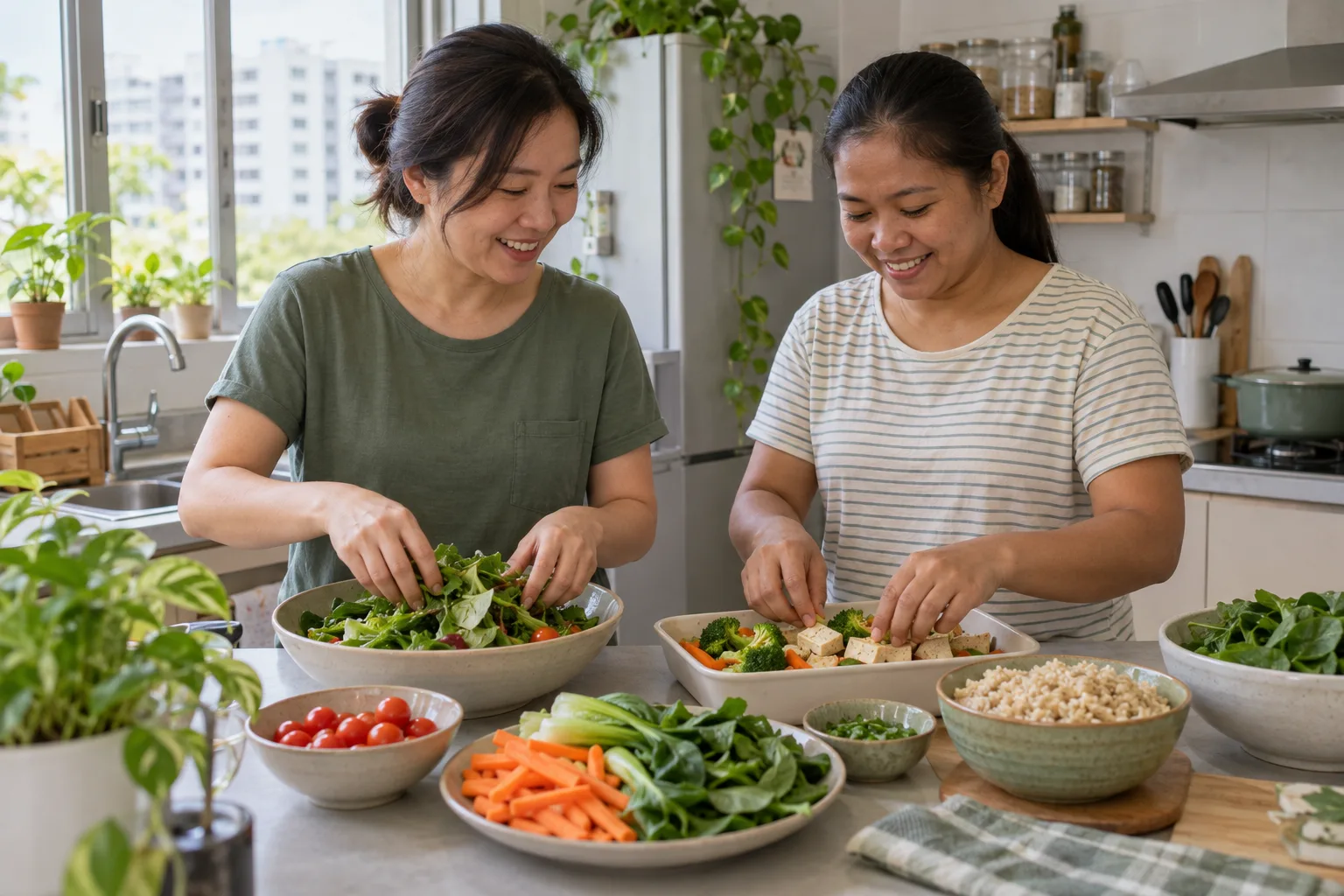
A vegetarian household needs more than a helper who can leave meat out of a recipe. You may need someone who recognises unsuitable sauces, plans satisfying meals and understands specific religious or family preferences. The best match comes from a clear conversation about cooking expectations and a separate, respectful conversation about what the helper herself can eat.
Define “vegetarian” before shortlisting
Families use the word differently. Some include eggs and dairy; others exclude both. Some avoid onion, garlic or particular ingredients for religious reasons. A household may permit meat outside the home but not in its kitchen. Explain your actual practice rather than expecting a candidate to infer it from the label. This is especially important when two family members follow different versions of the diet.
| Topic | Decision to clarify | Practical example |
|---|---|---|
| Eggs and dairy | Allowed, restricted or excluded? | Check noodles, pastries and breakfast options |
| Sauces and stocks | Which ingredients are unsuitable? | Review fish sauce, shrimp paste and meat stock labels |
| Religious preferences | What specific rules does the family follow? | Write down any onion, garlic or utensil requirements |
| Separate meals | Do family members need different versions? | Agree which variations are manageable |
| Shopping | Which approved brands and shops do you use? | Provide examples instead of relying on packaging colour |
| Helper’s own food | What does she need and prefer? | Agree food access, storage and preparation arrangements |
Make the brief short enough to use in a normal kitchen. Keep an approved shopping list with photographs of frequently purchased products, and show where to check the ingredients. If a product is unfamiliar, the default should be to ask rather than guess. Dietary preferences and food allergies are not interchangeable: where an allergy exists, obtain an appropriate safety plan and make that requirement explicit.
Assess the meals you actually eat
Ask the candidate to describe two or three dishes she has cooked and the ingredients she used. Then give her a sample weekday: breakfast, a packed lunch and dinner for your household. Ask for a simple shopping list and what she would change if one ingredient were unavailable. This tests understanding, planning and willingness to learn without expecting specialist knowledge of every vegetarian cuisine.
- Which vegetarian dishes have you prepared regularly, and for how many people?
- What stock, seasoning or sauces would you use for this dish?
- How would you check whether an unfamiliar packet meets our ingredient rules?
- What would you cook if the planned ingredient was unavailable?
- Which of our usual recipes would you like us to demonstrate?
- What foods do you need for your own meals, including any religious or health restrictions?
Look for transparent answers rather than confident guessing. A candidate who says she has not cooked your particular dishes but asks useful questions may be a better fit than one who agrees with everything. Do not rank cooking ability by nationality. If you need elaborate festival meals or multiple daily menus, disclose that scope and budget for training, time or outside catering instead of adding it after hiring.
Discuss the helper’s meals separately
MOM’s rest days and well-being guidance requires three meals a day and sensitivity to the helper’s dietary needs. It specifically cautions against forcing food she is uncomfortable with, including a family’s vegetarian diet. A cooking agreement is not permission to disregard her own food needs.
Use MOM’s dietary-preferences guide as a conversation starter. Ask about preferred portions, familiar meals and restrictions. If your kitchen excludes certain foods, work out an acceptable way to provide her meals before confirming the placement. Do not solve the difference by making her buy adequate food from her salary or wait until everyone else has finished eating.
Plan a balanced menu without inventing nutrition rules
HealthHub’s My Healthy Plate guide offers a general meal-planning framework that includes wholegrains, fruit and vegetables, and protein options such as beans and tofu. Use suitable options for your dietary rules rather than merely removing meat. For a child, older person or anyone with medical dietary needs, seek personalised advice from an appropriate healthcare professional.
| Period | Shared task | What to check |
|---|---|---|
| Before arrival | Agree the dietary brief and the helper’s meal arrangement | Both people understand the limits |
| Days 1–2 | Tour ingredients, appliances and storage | No unfamiliar product used without checking |
| Days 3–4 | Demonstrate two familiar everyday dishes | Taste, ingredient choices and realistic timing |
| Days 5–7 | Prepare a short menu and shopping list together | Enough variety without excessive work |
| Week 2 | Repeat meals with fewer prompts and review substitutions | Questions asked before changes |
| End of week 2 | Review portions, food access and workload privately | Helper and household both eating adequately |
Vegetarian food still needs safe handling
No-meat cooking does not eliminate food-safety risks. Follow the Singapore Food Agency’s food-safety tips for hygiene, storage and reheating. Teach your kitchen’s cleaning and leftover routine alongside recipes. Label prepared food clearly and avoid leaving dishes out while waiting for a late family dinner. Do not assume cooked rice, cut produce or dairy-containing meals are safe simply because they are vegetarian.
Keep the menu achievable when the helper also cares for children or an older relative. Batch preparation, a small repertoire of familiar dishes and a family-approved fallback meal reduce last-minute pressure. Review what actually gets eaten rather than measuring performance by the number of dishes cooked. If preferences change, update the shared brief and shopping examples instead of blaming the helper for following yesterday’s instructions.
How this guide avoids overlap
This page addresses vegetarian ingredient rules and two-way dietary compatibility. The broader helper cooking-skills guide covers general meal preparation and workload. Use the interview-question guide for the wider employment discussion and the home-onboarding checklist for arrival preparation. Search helper profiles with a written dietary brief ready.
Sources and review note
Reviewed on 17 September 2026 using MOM’s adequate-food and dietary-preference guidance, HealthHub’s My Healthy Plate resource and SFA’s food-safety tips. The interview and menu templates are editorial suggestions, not personalised nutrition advice. Verify any religious, allergy or medical requirement before selecting ingredients.
Frequently asked questions
Must a helper be vegetarian to work in a vegetarian home?
Not necessarily. Assess whether she understands and is comfortable preparing your meals, while separately discussing her own dietary needs. Do not assume that accepting the cooking role means she has agreed to eat only the family’s food.
Can I require my domestic helper to eat our vegetarian meals?
MOM requires adequate food and says employers should not force helpers to eat food they are not comfortable with. Agree a practical arrangement that accommodates her needs rather than treating the family’s diet as the automatic rule for her meals.
How can I assess vegetarian cooking experience before hiring?
Give the candidate your precise ingredient rules and ask her to talk through a realistic meal plan, shopping list and substitutions. Discuss sauces, stocks, eggs, dairy and any religious restrictions. A conversation about your usual meals is more useful than a vague claim that she can cook vegetarian food.
Official references
These primary references support the guide. A verification date is shown only after a dated editorial review.
- Rest days and well-being for migrant domestic workers — Ministry of Manpower Singapore (checked 17 Sept 2026)
- Connecting through cuisine: understanding your helper’s dietary preferences — Ministry of Manpower Singapore (checked 17 Sept 2026)
- Plan your meals with My Healthy Plate — HealthHub Singapore (checked 17 Sept 2026)
- Food safety tips — Singapore Food Agency (checked 17 Sept 2026)