
Domestic Helper for Diabetes Care in Singapore
Hire and train a domestic helper for diabetes care with a clear task scope, interview plan, blood-sugar emergency card and caregiver training pathway.
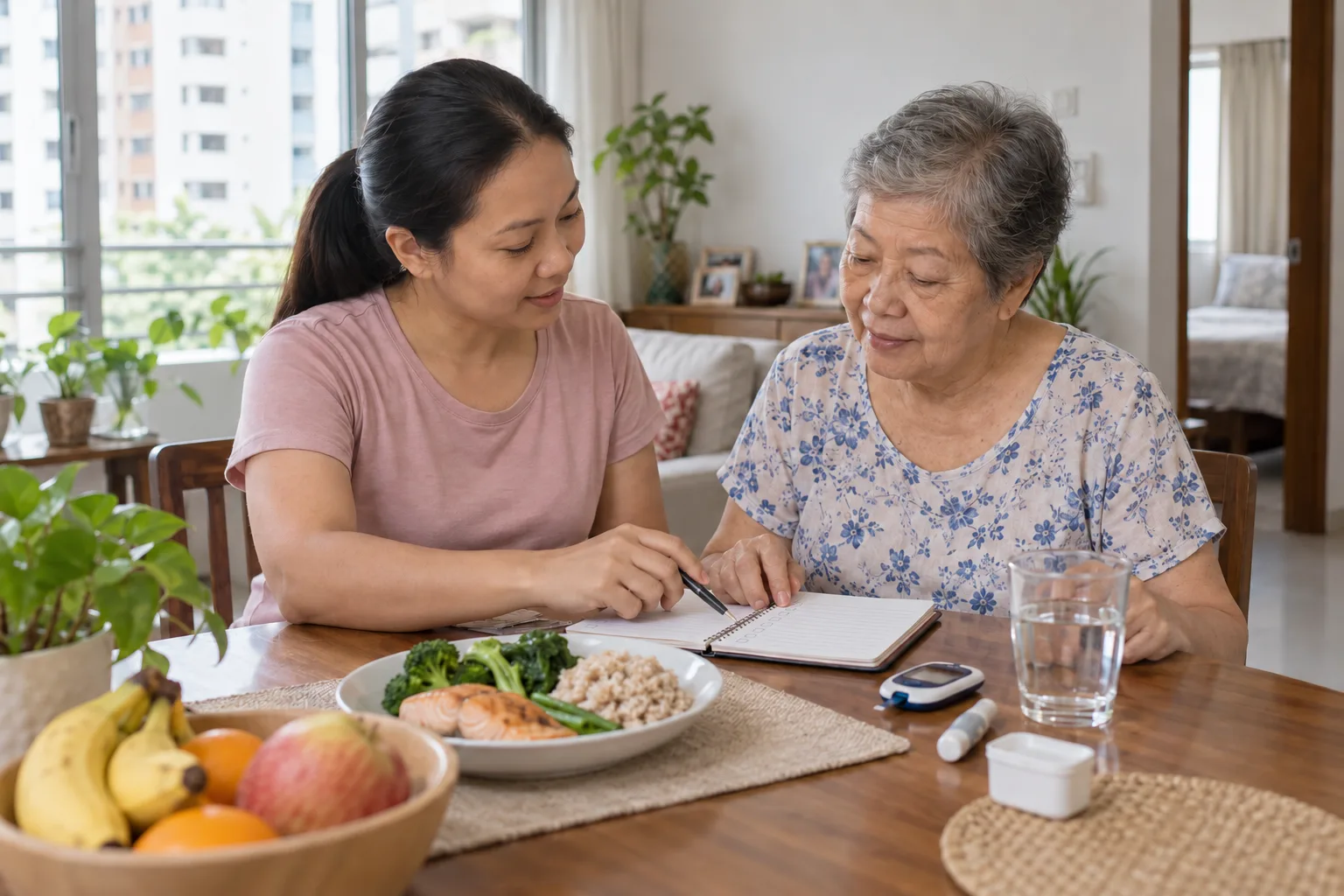
A domestic helper can make a diabetes routine more consistent, but the safest hire is not simply the candidate who says she has “eldercare experience”. Employers need to translate the care recipient’s actual plan into observable tasks, identify what needs formal training and preserve the person’s independence. The goal is reliable support under a family-and-clinician plan, not turning a helper into an untrained substitute nurse.
Define the care job before reading biodata
HealthHub’s guide to supporting a person with diabetes highlights medication adherence, blood-sugar monitoring, food, activity, sleep, stress and problem-solving. Not every household needs help in every area. Ask the person receiving care what support is wanted, then ask the clinician which tasks require instruction, supervision or a qualified provider.
| Care need | Possible helper support | Family or professional owner |
|---|---|---|
| Daily routine | Prompt agreed meals, hydration, activity and appointments | Care recipient and family approve the schedule |
| Medication | Give reminders or perform only a task taught and authorised in the care plan | Prescriber sets medicine and dose |
| Blood-sugar monitoring | Prepare equipment and record readings if trained | Clinical team sets target and response plan |
| Meals | Cook the written menu and portions | Care recipient, dietitian or clinician sets dietary advice |
| Foot observation | Notice and report a cut, blister, colour change or swelling | Clinician evaluates concerns |
| Emergency response | Follow the household response card and call for help | Family and clinical team write the plan |
Write down boundaries as clearly as duties. A helper should not improvise an insulin dose, stop prescribed medicine, diagnose a symptom or hide an abnormal reading because she fears blame. If the care plan depends on a clinical procedure, arrange proper hands-on teaching and confirm who provides cover on rest days.
Interview for process, judgement and communication
Past care experience matters only when the candidate can describe what she actually did, who trained her and when she escalated. Use scenarios rather than yes-or-no questions. Avoid testing medical trivia that is unrelated to your household’s plan.
- Tell me about the person you supported and which diabetes tasks you personally performed.
- Show me how you would read a written schedule and record a result without changing it.
- What would you do if a reading or symptom was outside the written plan?
- How would you respond if the care recipient refused food, medicine or a check?
- Which tasks would you need us or a trainer to demonstrate again?
- How would you update the family while protecting the care recipient’s dignity?
After the interview, verify work history through the available MOM and agency records and speak with a referee where appropriate. During a practical assessment, use clean demonstration equipment and ask the candidate to teach the steps back. Score accuracy, calm escalation and respect for consent; do not reward confident guessing.
Build a one-page diabetes support plan
Before the helper takes primary responsibility for any trained task, place one current sheet in an agreed location and keep a second copy with the family. Write it in language she understands. Review it after any hospital visit, medicine change or recurring abnormal result.
| Section | Record |
|---|---|
| Routine | Meal, medicine, monitoring, activity and appointment times |
| Exact task steps | Device, hygiene, recording and disposal instructions |
| Expected range | The individual target supplied by the care team, not a generic internet target |
| Warning signs | The person’s known symptoms and the action for each level |
| Contacts | Family lead, clinic, emergency number and backup caregiver |
| Handover | What must be reported immediately versus in the daily log |
| Boundaries | No diagnosis, dose changes or unapproved remedies |
Train for low blood sugar and foot concerns
HealthHub defines hypoglycaemia as blood sugar below 4.0 mmol/L and lists signs that can include sweating, dizziness, behaviour change, weakness, blurred vision, slurred speech, confusion and seizures. Its 15-15 instructions apply to a conscious person; it says to call an ambulance immediately if the person has lost consciousness. Put the care recipient’s clinician-approved response in the household plan and practise who calls, who stays with the person and who guides responders to the unit.
HealthHub’s diabetic foot-care guidance recommends daily checks for cuts, sores, corns or blisters and prompt medical review when a foot is injured or changes colour or appearance. A helper can observe and report if that task is wanted, but should not cut a wound, treat an ulcer or decide that a problem can wait.
Use structured caregiver training
AIC’s Caregivers Training Grant page says eligible care recipients can use the grant for approved training and that a migrant domestic worker may qualify as the main caregiver. Check the current criteria before assuming the grant applies. Choose training that matches the actual tasks, then have the family observe the return demonstration at home.
Care work must also be sustainable. Preserve agreed rest days, provide a reliable backup and avoid making one helper the sole holder of medical information. For broader shortlisting, use the elderly-care hiring guide; for a new post-hospital routine, use the hospital-discharge care guide.
How this guide avoids overlap
This guide owns diabetes-specific hiring, task definition, training and escalation. The elderly-care guide owns the broader shortlist, while the post-discharge guide owns the transition from hospital to home. It does not provide medical diagnosis or replace an individual treatment plan.
Sources and review note
Reviewed on 1 October 2026 against current HealthHub diabetes-support, hypoglycaemia and foot-care guidance and AIC caregiver-training information. Confirm clinical instructions with the care recipient’s own healthcare team.
Frequently asked questions
Can a domestic helper support someone with diabetes in Singapore?
Yes, a helper can support an agreed home routine such as meal timing, appointment reminders, mobility, observation and tasks she has been trained to perform. The person with diabetes, family and clinical team should define the plan. A helper should not diagnose, change medication doses or replace professional nursing care.
What diabetes skills should I assess before hiring a helper?
Assess whether she can follow a written schedule, measure and record accurately, prepare meals to instructions, recognise the household’s warning signs and escalate without delay. Demonstrate the exact equipment and ask her to explain the steps back to you; a biodata claim alone is not proof of competence.
Can a domestic helper use the Caregivers Training Grant?
AIC says a migrant domestic worker can use the Caregivers Training Grant when she is the main caregiver and the care recipient meets the scheme’s eligibility criteria. Diabetes alone does not automatically establish eligibility, so check the current age, nationality or disability criteria and approved course list with AIC.
Official references
These primary references support the guide. A verification date is shown only after a dated editorial review.
- Supporting individuals with diabetes — HealthHub Singapore (checked 1 Oct 2026)
- Hypoglycaemia: signs and response — HealthHub Singapore (checked 1 Oct 2026)
- Diabetic foot care — HealthHub Singapore (checked 1 Oct 2026)
- Caregivers Training Grant — Agency for Integrated Care (checked 1 Oct 2026)
- Planning a care routine — Agency for Integrated Care (checked 1 Oct 2026)
- Rest days and well-being for migrant domestic workers — Ministry of Manpower Singapore (checked 1 Oct 2026)
- Contracts and safety agreement for migrant domestic workers — Ministry of Manpower Singapore (checked 1 Oct 2026)