
Domestic Helper for Dementia Care Singapore: Hiring Guide
How Singapore families can shortlist and support a domestic helper for dementia care, including interviews, training, home safety, care boundaries, and respite.
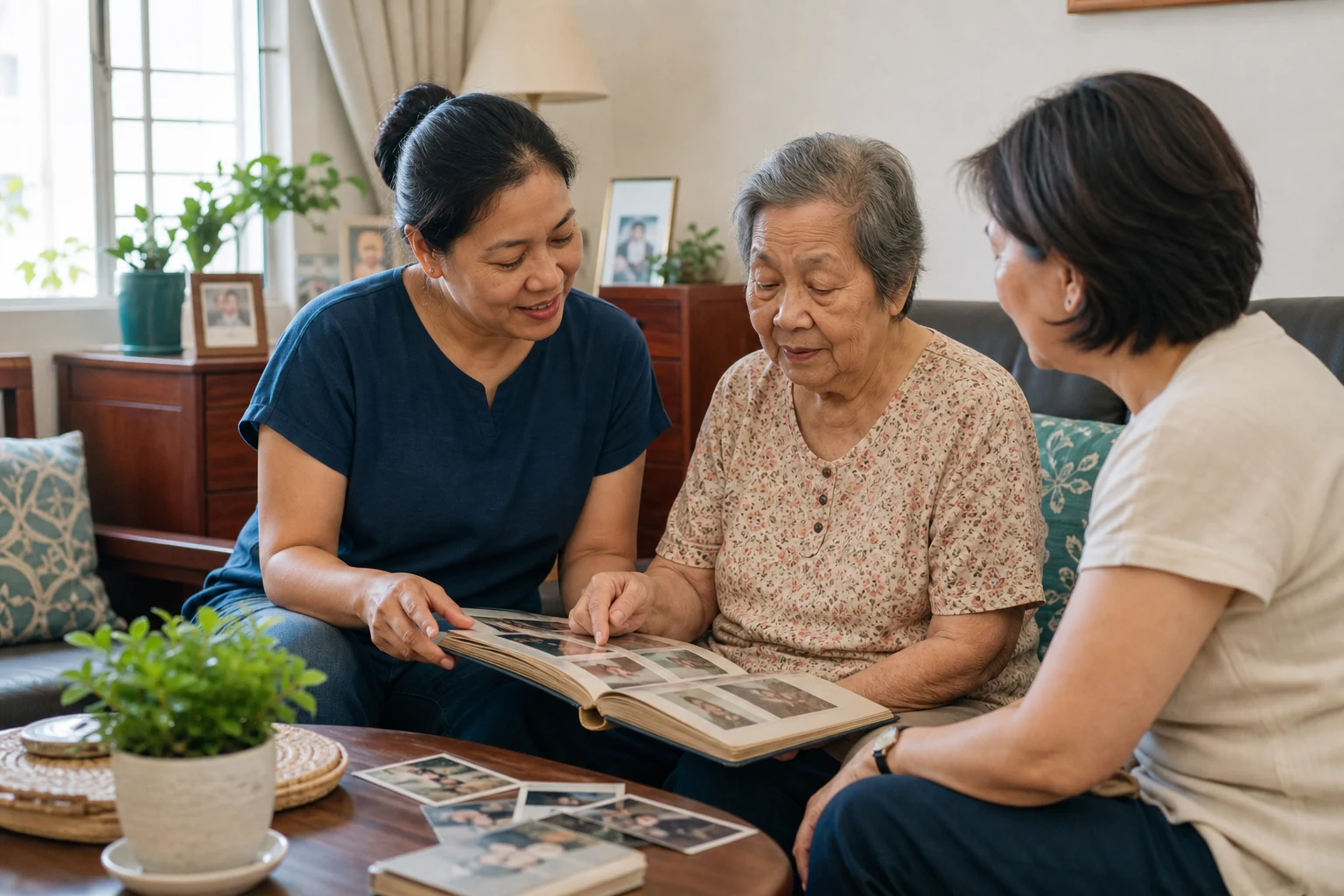
A domestic helper for dementia care in Singapore should be chosen for calm communication, observation, willingness to learn, and fit with one person's daily needs—not simply for a generic “eldercare” claim. Dementia affects people differently, and a helper needs a family-led care plan, practical training, a safe home, backup coverage, and a clear boundary between household support and clinical care.
Quick answer
Write the care recipient's real routine and risks before opening biodata. Shortlist helpers with relevant, explainable experience; interview through scenarios; confirm communication language; arrange approved training; and keep family members responsible for healthcare decisions, medication instructions, appointments, finances, and emergency escalation. A helper can be an important caregiver, but she should not be the entire care system.
Start with the person, not the diagnosis label
AIC explains that dementia can affect memory, mood, behaviour, communication, orientation, and everyday activities, but every individual experiences it differently. Review the current AIC dementia-support guidance, then document what is true for your family member now.
- Which activities of daily living need prompting, supervision, or physical help?
- What time of day is confusion, anxiety, or restlessness more likely?
- Which language, name, tone, music, food, or activity feels familiar?
- Are there fall, swallowing, wandering, sleep, toileting, or medication risks?
- What can the person still do independently and should be encouraged to do?
- Which changes require a call to a family member, clinic, or emergency service?
Define support duties and clinical boundaries
| Usually suitable with instruction and training | Needs professional instruction or family decision | Do not leave vague |
|---|---|---|
| Preparing familiar meals and encouraging hydration | Texture changes, swallowing concerns, or prescribed diets | What to serve and what warning signs to report |
| Prompting bathing, dressing, toileting, and grooming | Transfers or personal care with significant mobility risk | Safe technique and when two people are needed |
| Walking together and doing familiar activities | New falls, sudden weakness, or acute confusion | Emergency contacts and escalation threshold |
| Recording routine observations | Changing medication dose or medical treatment | Only follow written professional or family instructions |
| Using calm redirection during repeated questions | Persistent distress, aggression, or major behaviour change | Safety plan and professional support route |
Never ask a candidate to promise that she can prevent every fall, episode of distress, or attempt to leave home. A credible interview answer recognises risk, follows the care plan, stays calm, protects immediate safety, and escalates when the situation exceeds the agreed role.
What evidence to look for in biodata
Browse elderly-care helper profiles, but treat tags as the beginning of verification. Ask the agency which details were documented, observed, tested, or self-reported. Employment in an older person's home does not automatically mean hands-on dementia-care experience.
- The care recipient's needs and level of independence—not private identifying details.
- Exact tasks: prompting, personal care, mobility, meals, escorting, night routine, or activity engagement.
- Whether a nurse, family member, or another helper led the care plan.
- Training completed and whether the candidate can explain how she applied it.
- Communication language used with the older adult and family.
- A clear reason the placement ended and what the candidate learned.
Use scenario questions, not a yes-or-no skills list
| Scenario | Ask the candidate | Listen for |
|---|---|---|
| The person asks the same question many times | What would you say and do? | Patience, reassurance, simple language, and redirection |
| The person refuses to bathe | How would you respond without forcing? | Choice, timing, privacy, a familiar routine, and escalation |
| The person says she must leave to “go home” | How would you keep her safe? | Calm validation, distraction, securing immediate risk, and contacting family |
| The person is more confused than usual | What would you observe and report? | Recognition that a sudden change may need prompt professional review |
| A family member gives an instruction that conflicts with the care plan | What would you do? | Clarification rather than guessing or silently choosing |
Assess communication in the care recipient's strongest language
Fluency is less important than whether the helper can use short sentences, one instruction at a time, a calm tone, gestures, and familiar words. During the interview, role-play a simple routine in the language likely to be used at home. Ask the candidate to repeat a safety instruction in her own words and to show how she would seek clarification.
Train for this person's needs
AIC says the Caregivers Training Grant (CTG) can subsidise approved caregiving courses. A domestic helper may qualify when she is the main caregiver of an eligible Singapore Citizen or PR care recipient and completes the approved course. The current AIC page describes the care-recipient criteria, grant balance, co-payment, and application through the training provider.
Select training for the actual tasks: dementia communication, daily care, safe transfers, fall prevention, feeding, or emergency response. After a course, ask the helper to demonstrate the household-specific procedure with the family member or professional who owns the care plan.
Make the home easier to understand and safer to move through
AIC recommends assessing hazards and notes that home changes such as grab bars, better lighting, and rearranged furniture can reduce fall risk. Its home-safety guidance also points families to professional assessment and a dementia-friendly HDB home guide.
- Keep frequently used paths bright, uncluttered, and consistent.
- Store medicines, sharp objects, chemicals, and important documents securely.
- Use simple labels, familiar objects, and contrast where these help the person orient herself.
- Write emergency contacts and escalation steps where the helper can find them quickly.
- Ask an occupational therapist or healthcare professional about risks that need individual assessment.
- Review the setup as mobility, vision, sleep, or behaviour changes.
Build backup and respite into the plan
Plan who covers the helper's weekly rest day, illness, training, home leave, and periods of difficult behaviour. Options may include family rotation, dementia day care, respite services, home care providers, or intermittent basic elder-minding from selected HSS companies where suitable. Match the service to the level of care; basic supervision is not home nursing.
Protect the helper's well-being too
Dementia care can involve interrupted sleep, repeated communication, and emotional strain. Agree realistic night duties, protected rest, private time, and a no-blame way to report that care has become unsafe or unmanageable. MOM requires a weekly rest day, including at least one rest day each month that cannot be compensated away. Review MOM rest-day and well-being rules and keep backup care available.
A safe first-month plan
- Days 1–3: family leads routines, demonstrates care, and explains the emergency plan.
- Week 1: helper performs familiar tasks with observation and daily check-ins.
- Week 2: review communication, sleep, food, toileting, mobility, and any distress triggers.
- Weeks 3–4: complete priority training and adjust the written care plan.
- End of month: confirm which duties are safe, which need support, and what respite schedule will continue.
How this guide avoids overlap
This page owns the dementia-specific helper selection, training, communication, and home-safety intent. For broader eldercare shortlisting, use the elderly-care maid guide. For general interview structure across household roles, use the maid interview guide.
Sources and review note
Last reviewed 27 August 2026. Primary references: AIC dementia support, Caregivers Training Grant, and home-safety guidance, plus MOM contracts and rest-day requirements linked above. This is a hiring and care-planning guide, not medical advice; seek a qualified healthcare professional for diagnosis or individual clinical decisions.
Frequently asked questions
Can a domestic helper care for someone living with dementia?
A helper can support agreed daily routines when she has suitable experience, training, a clear care plan, safe working conditions, and family oversight. She does not replace diagnosis, nursing, medical advice, or the family's responsibility to coordinate professional care and emergencies.
Can a domestic helper use the Caregivers Training Grant?
AIC says a domestic helper may use the grant when she is the main caregiver of an eligible Singapore Citizen or Permanent Resident care recipient and completes an approved course. Families should check the current eligibility and application process directly with AIC.
What should I ask in a dementia-care helper interview?
Use calm scenarios: repeated questions, refusal to bathe, a changed sleep pattern, a fall risk, or a person trying to leave home. Ask what the candidate would observe, say, do, record, and escalate. Look for patience and judgment rather than memorised medical terms.
Official references
These primary references support the guide. A verification date is shown only after a dated editorial review.
- Dementia support and dementia-friendly homes — Agency for Integrated Care (checked 27 Aug 2026)
- Caregivers Training Grant — Agency for Integrated Care (checked 27 Aug 2026)
- Making your home safe — Agency for Integrated Care (checked 27 Aug 2026)
- Rest days and well-being for migrant domestic workers — Ministry of Manpower Singapore (checked 27 Aug 2026)
- Contracts and safety agreement for migrant domestic workers — Ministry of Manpower Singapore (checked 27 Aug 2026)