
Hire a Domestic Helper Before Baby Arrives Singapore: Timeline
When to hire a helper before delivery in Singapore, with a timeline for shortlisting, Work Permit steps, onboarding, infant safety and backup care.
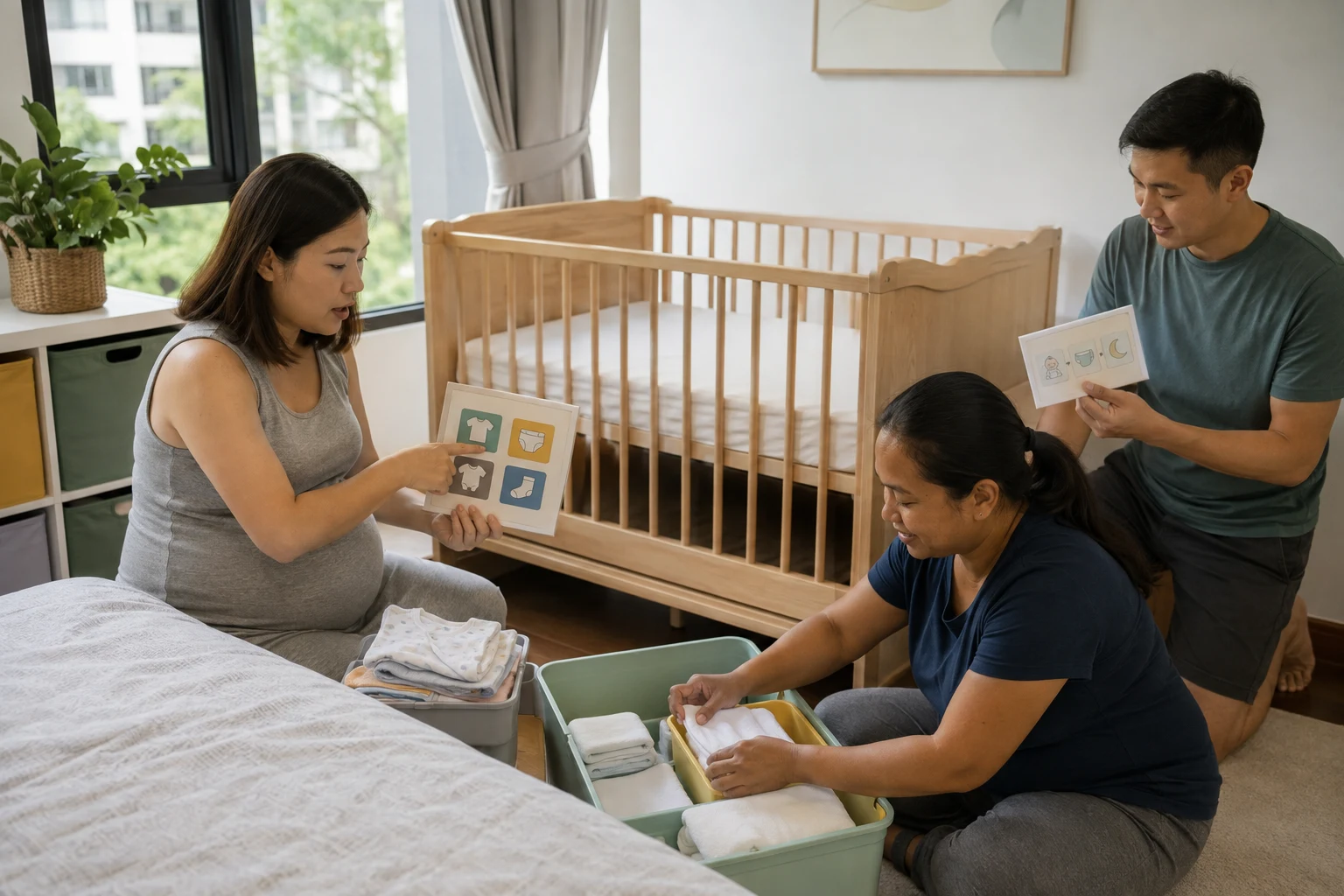
The best time to hire a domestic helper before a baby arrives is early enough for a calm household transition, not so late that interviews, paperwork, arrival steps, and training collide with delivery. A helper can learn the home and reduce non-baby workload before birth, but parents should remain the decision-makers for newborn feeding, sleep, healthcare, bonding, and the postnatal support plan.
Quick answer: begin several months, not several days, ahead
HealthHub’s parents-to-be material says families planning to hire a domestic helper should try to have her arrive a few months before the delivery date so there is time to train, adjust expectations, build trust, and familiarise her with chores. Work backwards from the estimated delivery date with contingency for candidate availability, documentation, travel, medical checks, and a baby who may arrive early.
Use a planning window, not a promised arrival date
| Window before delivery | Employer focus | Do not rush |
|---|---|---|
| 4–6 months | Define role, budget, accommodation, leave and backup; start profile research | Choosing by nationality or speed alone |
| 3–4 months | Interview, verify experience, select route and begin formal application | Paying before documents and terms are clear |
| 2–3 months | Complete arrival or transfer steps and household onboarding where timing allows | Assuming every administrative step will match the estimate |
| 1–2 months | Train household, hygiene, meals, laundry, transport, rest and emergency routines | Leaving all training until after birth |
| After birth | Parent-led baby-specific demonstrations and supervised practice | Handing over complete newborn care immediately |
MOM lists an online Work Permit application processing time of about one week for most cases, but this is not the total hiring timeline. Candidate sourcing, written consent, extra information, source-country or embassy requirements, travel, insurance and bond arrangements, medical examination, the Settling-In Programme for first-time MDWs, permit issuance, and unexpected delays all sit around that application stage.
Write the post-birth role before interviewing
- Who covers feeds, nights, medical appointments, older children, cooking, cleaning and visitors?
- Which duties are temporary during parental leave and which continue after return to work?
- How will a parent recover sleep if the helper also needs a sufficient sleep block?
- What infant tasks require direct parent or professional demonstration?
- Which chores can be reduced, automated, delayed or outsourced?
- Who provides backup on the helper’s rest day, illness, training, or home leave?
Shortlist for evidence and willingness to learn
Use current infant-care helper profiles to build a shortlist, then verify the babies’ ages, length of care, parent involvement, feeding method, sleep setup, bathing, hygiene, night arrangement, emergency response, and other household duties in each previous role. Motherhood is not a substitute for recent, relevant, explainable experience, and a “newborn” tag is not enough evidence by itself.
| Scenario | Ask | Strong answer signals |
|---|---|---|
| Parent’s instruction differs from past job | Which method do you follow? | Uses current family and healthcare guidance, asks rather than argues |
| Baby will not settle | What would you observe and try? | Calm, safe soothing; no shaking; calls parent when needed |
| You were awake repeatedly at night | How should the next day change? | Reports fatigue and expects reduced duties and recovery rest |
| Relative gives feeding advice | Can you change the plan? | Keeps parents as decision-makers and seeks clarification |
| Birth or arrival timing changes | How do we adjust? | Open communication about duties, start date and training |
Compare transfer and overseas hiring without panic
A transfer helper may be available sooner and can have Singapore references, but the transfer still needs current-employer consent, a valid medical examination and permit, Work Permit approval, insurance, bond, and an agreed issue date. An overseas candidate may offer suitable experience but involves travel and source-country steps. In either route, leave contingency and never permit work before the new Work Permit is issued in your name.
Use the pre-birth period for household onboarding
- Agree salary, rest days, duties, privacy, food, accommodation, communication, and feedback.
- Teach appliances, cleaning products, laundry separation, grocery systems and family meals.
- Practise clinic, market, childcare and emergency routes without carrying a newborn.
- Prepare a short written routine and label essential storage with plain language or pictures.
- Reduce hazards, secure chemicals and medicines, and set up a clear infant-care area.
- Have the helper explain safety steps back in her own words rather than simply saying yes.
Prepare baby safety, then retrain after birth
HealthHub’s birth-preparation guidance recommends a safe sleep space with a firm mattress and appropriate transport preparation. Its baby home-safety guide covers supervision, bath safety, cot setup, falls, choking hazards, electrical outlets, and secure storage. Parents can explain these principles before birth, then demonstrate the baby’s actual feeding, sleep, bathing, soothing, and healthcare instructions after birth while directly supervising practice.
Protect postnatal recovery without transferring the whole load
Decide which adult is responsible during each daytime and nighttime block. A helper can support meals, laundry, bottles or pump parts as instructed, household upkeep, and supervised infant care, but she should not be on call around the clock. If nights are interrupted, reduce the next day’s chores and protect a real sleep period. Arrange family, confinement support, cleaning, meal delivery, or childcare backup where needed.
Keep the due date from becoming a deadline trap
A baby may arrive early, a candidate may withdraw, or an application may need more information. Prepare a no-helper version of the first weeks: identify who can cook, clean, handle older children, accompany appointments, shop, and cover nights. A slower, verified match with temporary support is usually safer than accepting unclear biodata, unsuitable duties, or rushed terms because the estimated delivery date is close.
How this guide avoids overlap
This page owns pre-delivery timing, hiring contingency, and before-birth household onboarding. The infant-care guide owns newborn interview questions; the twins guide owns two-baby routines; the first-time employer guide covers the broader employer process.
Sources and review note
Last reviewed 3 September 2026. Primary references: HealthHub parent-to-be, birth-preparation, and home-safety guidance plus MOM Work Permit, hiring, transfer, contract, and rest-day guidance, linked above and listed below. This is a hiring timeline, not pregnancy, postnatal, infant-feeding, or medical advice.
Frequently asked questions
When should I hire a domestic helper before my baby arrives?
HealthHub guidance suggests trying to bring a new helper in a few months before delivery so the household has time for training, adjustment, trust, and familiarisation. Your exact start date should also allow for shortlisting, interviews, Work Permit and source-country steps, arrival requirements, and possible delays.
Is a transfer helper always faster for expectant parents?
A transfer candidate is already in Singapore, but the timing still depends on current-employer consent, permit validity, medical requirements, Work Permit approval, insurance, the agreed transfer date, and availability. Compare verified infant experience and fit as carefully as speed.
What can a helper learn before the baby is born?
She can learn household routines, hygiene systems, meals, laundry, transport, emergency contacts, parent preferences, safe-sleep principles, equipment setup, and how duties will change after birth. Parents should still demonstrate baby-specific feeding, bathing, soothing, sleep, and healthcare instructions after birth.
Official references
These primary references support the guide. A verification date is shown only after a dated editorial review.
- Assistance and support before a baby arrives — HealthHub Singapore (checked 3 Sept 2026)
- Apply for a Work Permit for a migrant domestic worker — Ministry of Manpower Singapore (checked 3 Sept 2026)
- Gearing up for birth — HealthHub Singapore (checked 3 Sept 2026)
- Making your home safe for your baby — HealthHub Singapore (checked 3 Sept 2026)
- Eight steps to hiring a helper — Ministry of Manpower Singapore (checked 3 Sept 2026)
- Transfer a migrant domestic worker to a new employer — Ministry of Manpower Singapore (checked 3 Sept 2026)
- Contracts and safety agreement for migrant domestic workers — Ministry of Manpower Singapore (checked 3 Sept 2026)
- Rest days and well-being for migrant domestic workers — Ministry of Manpower Singapore (checked 3 Sept 2026)