
Domestic Helper for Special-Needs Child Singapore: Guide
How Singapore families can shortlist a helper for a child with disability, including interviews, training, routines, boundaries, financial support, and respite.
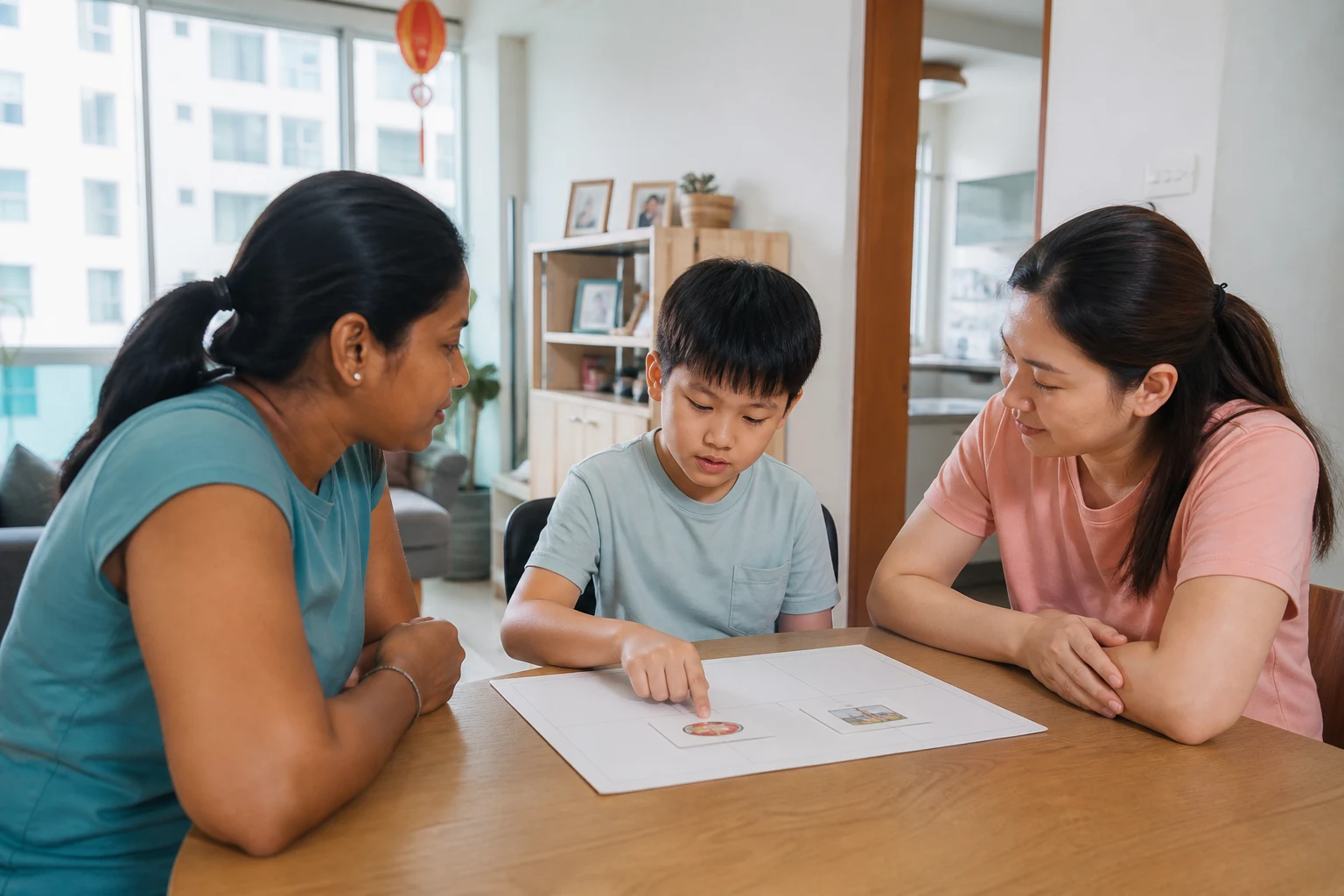
Hiring a domestic helper for a child with special needs in Singapore begins with one child's abilities, preferences, routines, and risks—not a broad diagnosis label. The right helper may provide valuable continuity at home, but she needs a family-led support plan, relevant training, realistic duties, professional handovers, rest, and a clear route for asking for help.
Quick answer
Write a care-and-routine brief before opening biodata. Shortlist candidates for patience, communication, observation, and willingness to learn; interview with realistic scenarios; arrange training for the exact tasks; and keep parents responsible for healthcare, education, therapy decisions, consent, finances, and emergencies. A helper should strengthen the child's support team, not become the whole team.
Use respectful, specific language
“Special needs” is a common search phrase, but children and families may prefer “child with disability”, “child with additional support needs”, or the child's own description. In interviews, explain practical needs rather than reducing the child to a label. Say what the child enjoys, communicates, understands, can do independently, and needs help with.
SG Enable's Enabling Guide for child and adult care notes that the right support depends on the person's age, needs, and the level of support available from caregivers. It also points families to day services, caregiver training, home-based support, and other community options alongside foreign domestic help.
Create a child-specific support brief
| Area | Describe factually | Clarify the boundary |
|---|---|---|
| Communication | Words, signs, pictures, device, gestures, processing time | Who updates the communication approach |
| Daily living | Dressing, toileting, bathing, feeding, sleep, and independence | What needs prompting, supervision, or trained hands-on help |
| Safety | Road awareness, seizures, allergies, falls, wandering, or sensory overload where relevant | Emergency steps and when to call family or professionals |
| School and therapy | Transport, equipment, homework, exercises, and handovers | Helper supports only the agreed professional plan |
| Behaviour and regulation | Known triggers, calming routines, choices, and preferred spaces | No punishment, restraint, or improvised treatment |
| Participation | Play, friendships, family activities, and skills the child is learning | Support independence rather than doing everything for the child |
What to verify in biodata and work history
Start with childcare helper profiles, then verify every relevant claim. “Special-needs experience” can mean very different work: general supervision, school transport, personal care, feeding support, therapy practice, or assisting another caregiver. Ask what the helper did herself, what a parent or professional taught, and what she would need to learn for your child.
- What was the child able to do independently, and where did you assist?
- Which communication method did you use during daily routines?
- Who created the care, school, or therapy plan?
- What safety signs were you taught to notice and report?
- How did you record meals, toileting, sleep, medication instructions, or incidents?
- What part of that role felt difficult, and what training helped?
Interview with scenarios, not promises
| Scenario | Ask | Listen for |
|---|---|---|
| The child does not respond to a verbal instruction | What would you try next? | Processing time, visual cues, simple choices, and checking the plan |
| The school bus is late and the child becomes distressed | How would you support safety and communicate? | Calm routine, familiar supports, timely family update |
| The child refuses a meal | What would you do? | No force; checks feeding guidance, alternatives, warning signs, and escalation |
| A therapist's instruction is unclear | Would you continue the exercise? | Stops and clarifies rather than guessing |
| A relative asks for private details | What would you share? | Respects the child's and family's privacy boundaries |
Train for the tasks, not only the diagnosis
The SG Enable Caregiver Learning Roadmap organises learning around understanding disability, managing the caregiving role, providing care, transitions, and sustainable support. Use that structure to identify gaps instead of expecting one generic course to cover everything.
AIC's Caregivers Training Grant can subsidise approved courses for eligible caregivers, including domestic helpers who are the main caregivers of qualifying care recipients. Select courses for the actual duties—communication, personal care, mobility, feeding, emergency response, or condition-specific support—then practise the household routine with the parent or professional responsible for the plan.
Coordinate school and therapy handovers carefully
Decide who may give instructions to the helper, what may be written in a handover book, and which information requires parental consent. Teachers and therapists should not have to resolve conflicting family instructions through the helper. Give her one named family contact for decisions and a simple method to report observations without being asked to interpret clinical progress.
- Use a short daily handover: sleep, food, toileting, mood, notable events, and questions.
- Keep diagnosis reports, school documents, and therapy notes secure.
- Do not photograph or share the child unless the parent has clearly authorised it for a defined purpose.
- Write emergency contacts and instructions in language the helper understands.
- Review the plan whenever the child's abilities, school, equipment, or treatment changes.
Check financial and community support separately
Some households may qualify for the Home Caregiving Grant, which AIC says may be used for needs such as hiring a helper, home care services, or healthcare items when all criteria are met. MOM also publishes a levy-concession route for a person with disabilities. Eligibility, disability assessment, nationality, residence, and means-test rules differ, so verify each scheme directly rather than treating support as automatic.
Plan respite and protect the helper's well-being
Make a backup plan for weekly rest days, illness, training, home leave, school holidays, and periods when the child needs more support. Consider relatives, special student care, respite services, and suitable community programmes. A role with constant vigilance or broken sleep must be redesigned, not normalised. The helper needs predictable rest, privacy, and a safe way to report that a task exceeds her training.
A safe first-month plan
- Days 1–3: parent leads every key routine and explains the child's communication and consent cues.
- Week 1: helper supports familiar routines with direct observation and daily check-ins.
- Week 2: review safety, school handovers, sleep, meals, toileting, and sensory needs.
- Weeks 3–4: complete priority training and update the written support brief.
- End of month: confirm which duties are independent, supervised, professional-led, or out of scope.
How this guide avoids overlap
This page owns the special-needs-child helper selection, training, handover, and respite intent. For general baby or childcare screening, use the infant-care interview guide or the working-parents childcare guide.
Sources and review note
Last reviewed 29 August 2026. Primary references: SG Enable's Enabling Guide and Caregiver Learning Roadmap, AIC caregiver-training and home-caregiving support, and MOM levy, contract, and rest-day guidance linked above. This is a hiring guide, not medical, therapy, or educational advice.
Frequently asked questions
Can a domestic helper care for a child with special needs?
A helper can support agreed daily routines when she has suitable training, clear instructions, safe working conditions, and family oversight. She should not be expected to diagnose a condition or replace parents, teachers, therapists, nurses, or other professional support.
What should I ask in the interview?
Describe your child's real communication, mobility, feeding, sensory, safety, and school routines without oversharing private details. Ask the candidate what she would observe, say, do, record, and escalate in practical scenarios.
Can a domestic helper use the Caregivers Training Grant?
AIC says a domestic helper may use the Caregivers Training Grant when she is the main caregiver of an eligible Singapore Citizen or Permanent Resident care recipient and completes an approved course. Check current eligibility and course requirements with AIC.
Official references
These primary references support the guide. A verification date is shown only after a dated editorial review.
- Disability support resources for child and adult care — SG Enable – Enabling Guide (checked 29 Aug 2026)
- Caregiver Learning Roadmap — SG Enable – Enabling Guide (checked 29 Aug 2026)
- Caregivers Training Grant — Agency for Integrated Care (checked 29 Aug 2026)
- Home Caregiving Grant — Agency for Integrated Care (checked 29 Aug 2026)
- Levy concession for a migrant domestic worker — Ministry of Manpower Singapore (checked 29 Aug 2026)
- Contracts and safety agreement for migrant domestic workers — Ministry of Manpower Singapore (checked 29 Aug 2026)
- Rest days and well-being for migrant domestic workers — Ministry of Manpower Singapore (checked 29 Aug 2026)