
Domestic Helper for Pet Care in Singapore: Interview & Safety Guide
How Singapore pet owners can assess a domestic helper for feeding, walking, cleaning, safety, animal welfare, and a realistic household workload.
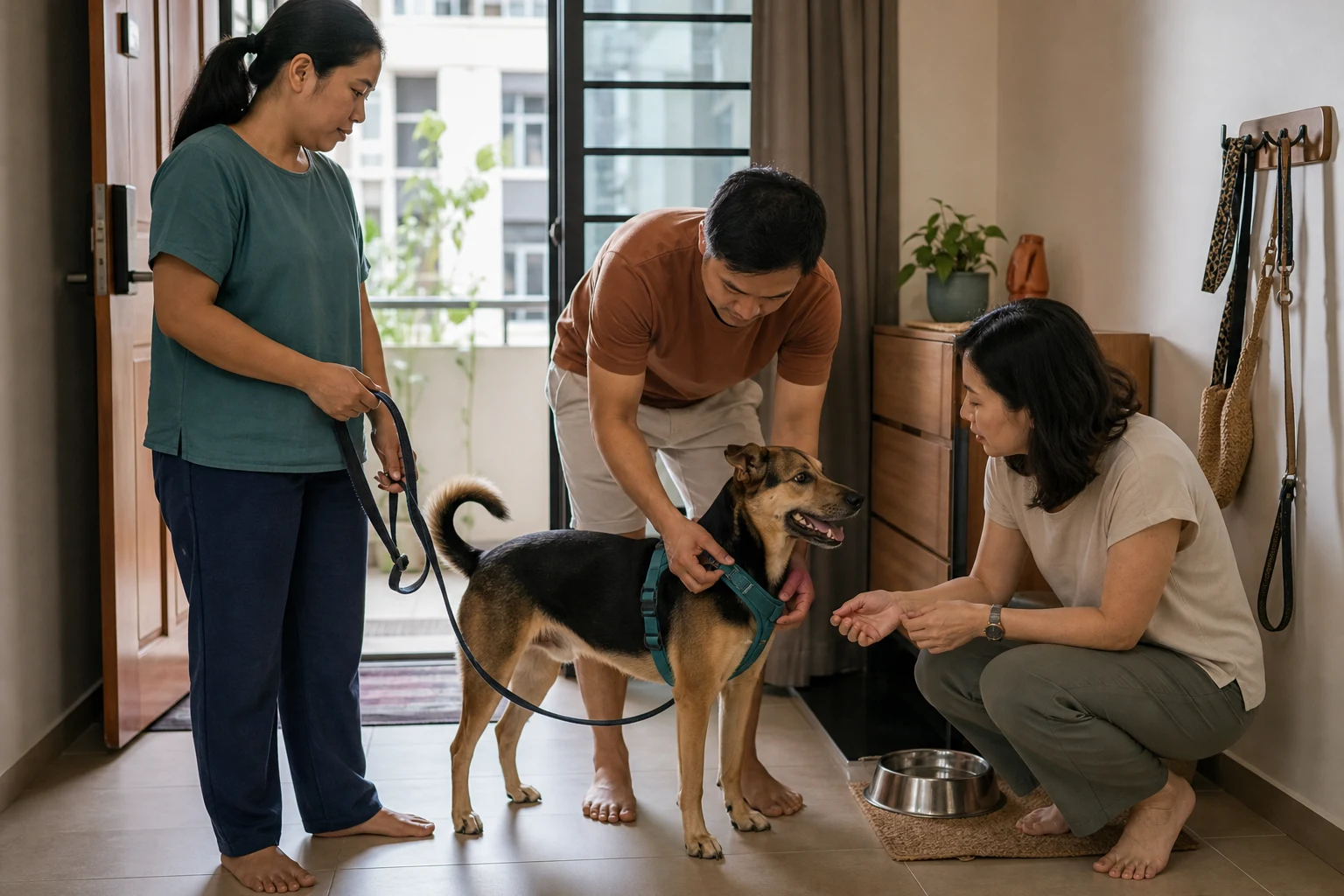
A pet-friendly domestic helper can support feeding, walking, litter or enclosure cleaning, and everyday observation. But “willing to care for pets” does not tell you whether someone can safely handle your particular dog, cat, rabbit, bird, or other animal. The match depends on species, size, behaviour, routine, experience, allergies, confidence, and the rest of the household workload.
Quick answer
Disclose every pet before the interview, write the exact daily and weekly duties, and shortlist candidates with relevant animal experience or genuine, informed willingness to learn. Ask practical safety questions, arrange an owner-led handover after employment begins, keep veterinary decisions with the owner, and plan pet cover for the helper's rest days.
Define “pet care” for your household
A calm indoor cat and a large reactive dog create very different jobs. Tell the agency and candidate the number, species, approximate size, age, health needs, behaviour around strangers, and normal routine. Be equally clear about which tasks the owner will continue to do.
| Area | Questions to settle |
|---|---|
| Feeding | Food, portions, timing, allergies, treats, and who orders supplies |
| Exercise | Walk frequency, route, harness, weather limits, dog-run rules, and behaviour triggers |
| Cleaning | Bowls, litter, bedding, cages, waste disposal, and pet-safe products |
| Health | What to observe, who gives approved medicine, vet contact, transport, and spending authority |
| Household fit | Children, other animals, visitors, doors, windows, lifts, and rest-day cover |
Check relevant experience, not just a tick box
Ask which animals the helper has lived or worked with, their size and temperament, and what she did without supervision. Someone experienced with a family's gentle cat may still need careful training for a strong dog on a busy footpath. Also ask about allergies, past bites or scares, and any task she would not feel safe doing.
Use AI helper search to describe the real need, such as “comfortable with a medium dog, twice-daily walks, feeding and paw cleaning, with no grooming or medication”. Then check the work-history details in the maid biodata directory and verify them through the listing agency.
Pet-care interview questions
- Which animals have you cared for, and what did you do each day?
- How large was the dog you walked, and how did it behave around other dogs or people?
- What would you do if a dog slipped its harness or a cat escaped through the front door?
- What signs in an animal would make you call the owner immediately?
- How would you separate pet utensils and food from the family's kitchen items?
- Are you comfortable cleaning urine, faeces, vomit, litter, cages, or bedding?
- Do you have allergies, fears, religious considerations, or physical limits we should discuss?
- How would you prioritise pet care alongside children, cooking, and cleaning?
Scenario answers should be calm and cautious. Look for someone who would secure the area, avoid chasing or grabbing unsafely, contact the owner, and follow the emergency plan. Do not expect veterinary diagnosis from a domestic helper.
Make the first handover owner-led and practical
After employment begins, the owner should demonstrate the feeding setup, leash and harness, walking route, door protocol, cleaning products, carrier, veterinary contact, and emergency transport plan. Practise together before asking the helper to handle the animal alone. If the animal shows fear or aggression, pause and seek appropriate professional advice.
The Animal and Veterinary Service publishes a Code of Animal Welfare for pet owners covering minimum expectations for housing, management, and care, as well as species-specific pet-care guidance. Owners should use those resources to set the household routine and remain accountable for it.
Build a written pet safety card
- Pet name, photo, microchip or licence details where applicable, and usual veterinarian
- Normal feeding quantities and foods or household items that must never be given
- Door, window, balcony, gate, carrier, harness, and lift safety rules
- Known triggers, body-language warning signs, and animals or places to avoid
- Owner, backup contact, veterinary clinic, emergency transport, and spending approval
- What the helper may do, what requires owner approval, and what needs urgent professional care
Keep the workload fair and arrange rest-day cover
Pet duties take real time. Count walks, cleaning, feeding, grooming support, and supervision when balancing childcare, eldercare, cooking, and housework. Revisit the schedule if a pet becomes ill or its needs change. The owner should arrange family, boarding, a walker, or another suitable option when the helper is on leave or her rest day.
MOM says a migrant domestic worker is entitled to one rest day per week and at least one rest day each month that cannot be compensated away. Record the agreed rest-day arrangement and duties clearly, using the official MOM rest-day and well-being guidance and MOM contract guidance.
Red flags to take seriously
- The pet was concealed until after the candidate accepted the role.
- The helper expresses fear, allergy, or a physical limit and is pressured to continue.
- A strong or reactive dog is assigned without an owner-led introduction and handling plan.
- The helper is expected to make veterinary diagnoses or pay pet expenses.
- Pet care expands but no other duties are reduced.
- No one is assigned to care for the pet during rest days, leave, or emergencies.
Sources and review note
Last reviewed 23 August 2026. Primary references: the AVS Code of Animal Welfare, AVS pet-care guidance, and MOM guidance on contracts, rest days, safety, and well-being linked above.
Frequently asked questions
Can a domestic helper care for pets in Singapore?
Pet care can be part of domestic duties when both parties agree on the scope. Employers should disclose every animal before hiring, check the helper's comfort and experience, provide hands-on training, and remain responsible for veterinary decisions and the pet's welfare.
What should I ask a helper about dog or cat care?
Ask about the species, size, temperament, feeding, walking, cleaning, medication support, and emergencies she previously handled. Use scenarios that match your pet and explain the real daily workload, including weekends and rest-day cover.
What if a helper is afraid of my pet?
Do not minimise or conceal the issue. Fear can create risk for the helper and animal. Consider a different match, a gradual owner-led introduction, or separate professional pet-care support; never pressure someone into handling an animal she cannot manage safely.
Official references
These primary references support the guide. A verification date is shown only after a dated editorial review.
- Code of Animal Welfare — Animal and Veterinary Service (checked 23 Aug 2026)
- Caring for a pet — Animal and Veterinary Service (checked 23 Aug 2026)
- Rest days and well-being for migrant domestic workers — Ministry of Manpower Singapore (checked 23 Aug 2026)
- Contracts and safety agreement for migrant domestic workers — Ministry of Manpower Singapore (checked 23 Aug 2026)