
Domestic Helper CCTV Singapore: Privacy and Nanny-Cam Guide
How employers can use home cameras without compromising a domestic helper’s privacy, including disclosure, prohibited private areas, access and incident rules.
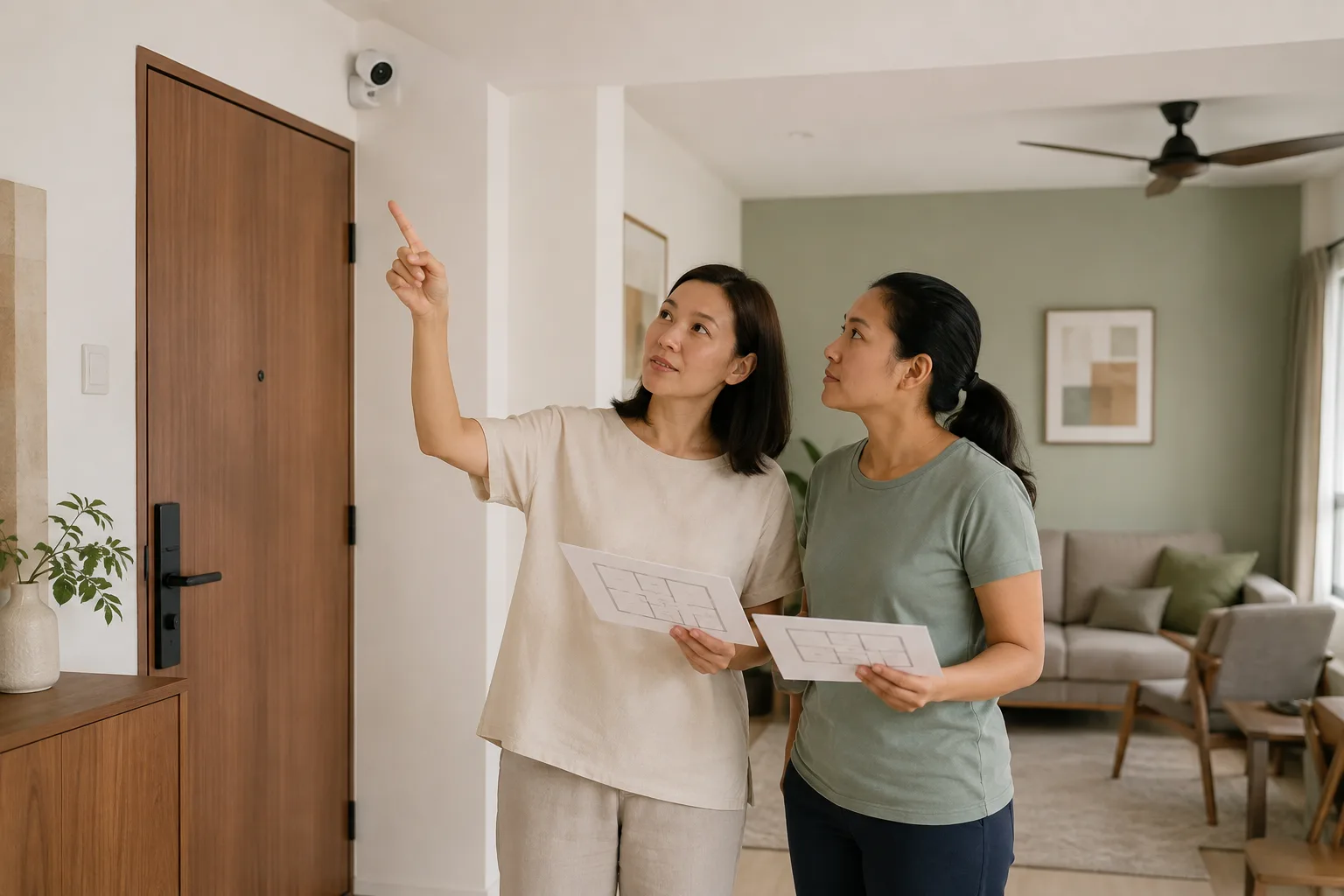
A nanny cam or home CCTV system can support entrance security, child safety and incident review, but it should not turn a home into undisclosed workplace surveillance. Before hiring a helper, decide why each camera is needed, which areas it covers, who can watch or download footage, and how the arrangement will be explained. Privacy should be designed before the helper moves in, not argued about after a recording is found.
Quick answer: disclose every camera and protect private areas
MOM’s accommodation and well-being rules say employers must inform an MDW about video recording devices and where they are placed. Cameras must not be installed where they compromise privacy or modesty, such as sleeping, changing or bathroom areas. A 2026 MOM parliamentary answer on MDW privacy repeats the disclosure duty and the need for adequate space and privacy.
Map cameras by purpose and privacy risk
| Area | Practical starting point | Reason |
|---|---|---|
| Main entrance | Disclose placement and limit the view to the security purpose | Lower privacy expectation than personal-care areas |
| Living or play area | Use only if needed; disclose view, recording and access | May capture work, children, visitors and private conversations |
| Kitchen | Avoid unnecessary close monitoring and explain any safety purpose | A working area can still contain personal conversations and breaks |
| Helper’s sleeping or changing area | Do not install | MOM identifies these as privacy and modesty areas |
| Bathroom or toilet | Do not install | Private area and serious legal risk |
| Care recipient’s private area | Get specific legal and care advice before recording | The child, senior or patient also has privacy and safety interests |
Create a written camera map before the first workday
Walk through the home with the helper and point to each device, including doorbells, baby monitors, old cameras that still work, indoor hubs and devices with remote viewing. State whether it records continuously or only on motion, whether audio is enabled, how long footage is kept, who can access it and the purpose. Give the helper a written copy in a language she understands and invite questions without treating questions as suspicious.
- Remove or physically disable unused cameras rather than saying they are probably off.
- Check the field of view after furniture or sleeping arrangements change.
- Protect camera accounts with unique passwords and multi-factor authentication where available.
- Limit viewing and downloads to household members who genuinely need access.
- Tell visitors and temporary caregivers where appropriate instead of assuming only the helper is affected.
Do not use cameras as a substitute for management
Continuous watching can magnify ordinary differences into conflict. Use a written job scope, demonstrations, scheduled check-ins and direct feedback for routine performance. A camera clip may omit what happened immediately before or after. Before accusing anyone, preserve the original clip, check time stamps and context, and speak calmly unless immediate safety requires a different response.
Understand the private-act boundary
The Singapore Police Force describes voyeurism as observing or filming a person engaged in a private act without permission. The Penal Code provisions on voyeurism and intimate recordings are more detailed and fact-specific. This guide is not legal advice: do not record private acts, do not place devices in prohibited private areas, and obtain qualified advice when a proposed use may cross that boundary.
Control viewing, storage and sharing
A disclosed camera can still cause harm if footage is casually shared. Do not post clips to social media, family chats, agency groups or community forums to shame or identify the helper. Avoid keeping routine footage indefinitely. If a recording may show a crime, injury or safeguarding incident, preserve the relevant original and ask the appropriate authority how to provide it securely.
| Control | Household decision | Review trigger |
|---|---|---|
| Purpose | One stated reason for every device | Camera used for a new purpose |
| Placement | Written map and verified field of view | Furniture, rooms or sleeping place change |
| Access | Named account holders only | Family, vendor or caregiver changes |
| Retention | Shortest useful routine period | Storage plan or subscription changes |
| Sharing | No casual forwarding or public posting | An incident may require authorities |
| Conversation | Helper can raise privacy concerns privately | Concern, blind spot or relationship strain |
Discuss cameras during interviews and onboarding
Tell candidates that cameras are present, where they are and why. Do not wait until after a transfer or overseas placement is accepted. Record the arrangement alongside other mutually agreed terms and house rules; MOM’s contract guidance encourages a written employment contract to reduce disputes. Consent to employment should not be presented as consent to surveillance in private areas.
If a concern is reported
Take the camera concern seriously. Verify device location and settings, stop any questionable recording, prevent further access or sharing, and preserve evidence without circulating it. Contact MOM for employment and accommodation concerns, the Police for suspected criminal conduct or immediate danger, and a qualified lawyer for legal advice. Do not retaliate against a helper for raising a privacy issue.
How this guide avoids overlap
This page owns camera disclosure, placement, footage access and nanny-cam privacy intent. For sleeping-space requirements beyond cameras, see the home preparation checklist; for broader working-relationship routines, see how to treat your helper well.
Sources and review note
Last reviewed 5 September 2026. Primary references are MOM’s accommodation and privacy guidance, the Singapore Police Force voyeurism advisory, the current Penal Code text and MOM contract guidance, linked above and listed below. Seek case-specific legal advice where necessary.
Frequently asked questions
Must I tell my domestic helper about CCTV at home?
Yes. MOM says employers who install video recording devices at home must inform their MDW that the devices are present and where they are placed.
Can I place a camera in my helper’s bedroom or sleeping area?
No. MOM says recording devices must not be installed in areas that compromise the helper’s privacy or modesty, including where she sleeps, changes clothes or uses the bathroom.
Can I secretly record my helper if I suspect a serious problem?
Do not secretly record private areas or private acts. Preserve existing relevant evidence, prioritise immediate safety, and seek advice from MOM, the Police or a qualified lawyer for the specific situation. A suspicion does not cancel privacy, criminal-law or fair-treatment obligations.
Official references
These primary references support the guide. A verification date is shown only after a dated editorial review.
- Rest days and well-being for migrant domestic workers — Ministry of Manpower Singapore (checked 5 Sept 2026)
- Parliamentary answer on privacy and accommodation for migrant domestic workers — Ministry of Manpower Singapore (checked 5 Sept 2026)
- Voyeurism advisory — Singapore Police Force (checked 5 Sept 2026)
- Penal Code provisions on voyeurism and intimate recordings — Singapore Statutes Online (checked 5 Sept 2026)
- Contracts and safety agreement for migrant domestic workers — Ministry of Manpower Singapore (checked 5 Sept 2026)